Introduction: Why The Princess Diaries 3 Matters More Than Ever
More than two decades after The Princess Diaries introduced audiences to an awkward teenager discovering her royal identity, the franchise remains one of Disney’s most beloved coming-of-age stories. Now, with The Princess Diaries 2: Royal Engagement leaving fans on a hopeful yet open-ended note, anticipation for the third installment has reached an all-time high.
The Princess Diaries 3 is not just another sequel. It represents a generational shift—from fairy tale transformation to real-world leadership. This time, the story isn’t about becoming a princess. It’s about surviving as a queen.
And that changes everything.
A Story That Grows With Its Audience
At the heart of the upcoming film is Queen Mia Thermopolis, portrayed once again by Anne Hathaway. However, this version of Mia is far removed from the girl who once struggled to walk in heels.
She is now a ruler.
And ruling is messy.
Early insights suggest that Genovia is entering a new political era—one that demands transparency, reform, and difficult decisions. Unlike previous films that leaned into romantic fantasy, this chapter is expected to explore:
- The pressure of modern leadership
- The balance between personal identity and public duty
- The emotional cost of power
This evolution aligns perfectly with the audience that grew up with Mia. Fans who once related to teenage insecurity now face careers, responsibilities, and complex choices of their own.
In that sense, The Princess Diaries 3 becomes more than entertainment—it becomes reflection.
The Return of Familiar Faces
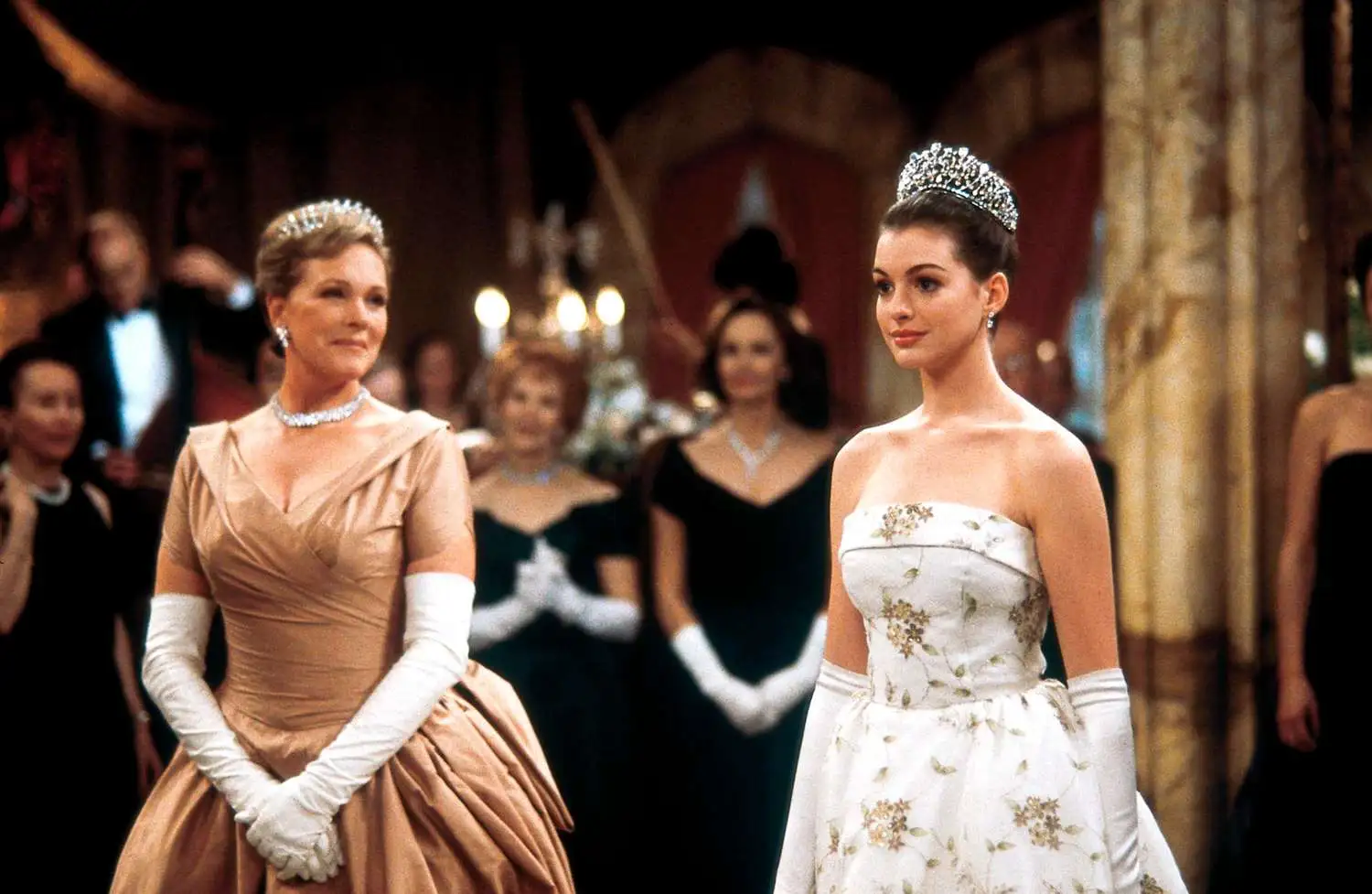
One of the most exciting aspects of the sequel is the potential return of iconic characters.
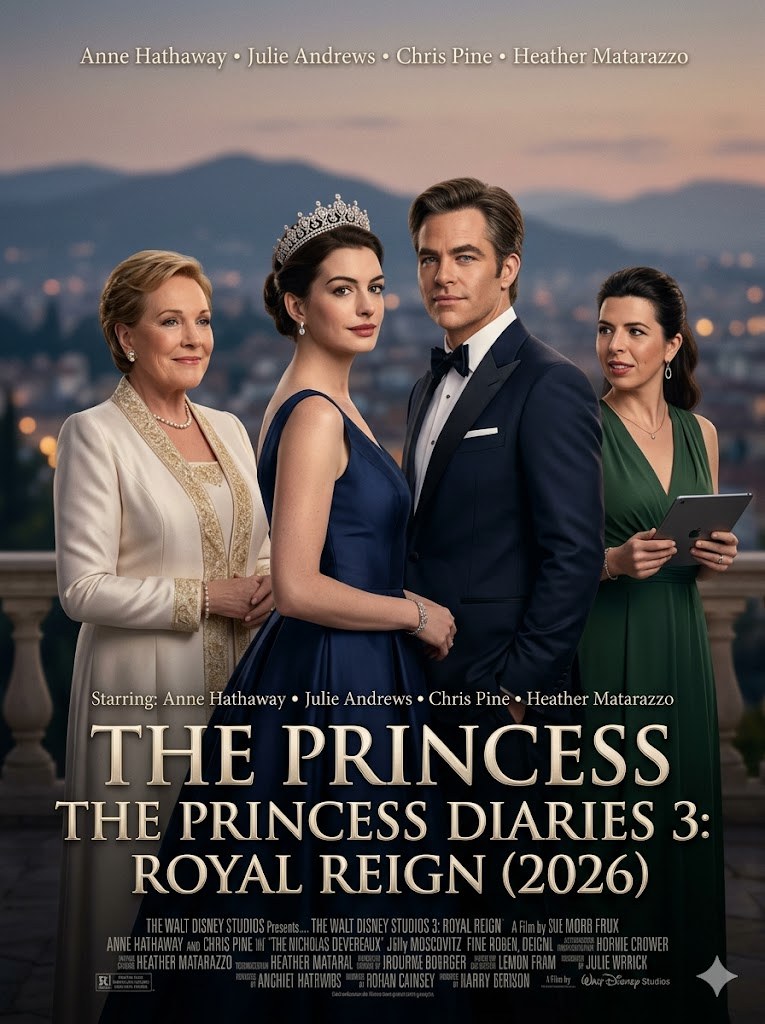
While Anne Hathaway is confirmed, fans are also hopeful for appearances by:
- Julie Andrews as Queen Clarisse
- Chris Pine as Nicholas Devereaux
- Heather Matarazzo as Lilly Moscovitz
Each character represents a different piece of Mia’s identity—mentor, love interest, and grounding friendship.
If they return, their roles are expected to evolve as well. Clarisse may no longer be the guiding force but rather a symbol of legacy. Nicholas could represent unresolved emotional threads. Lilly, as always, may serve as Mia’s voice of truth in a world filled with political noise.
A More Mature Tone Without Losing Its Charm
One of the biggest challenges for The Princess Diaries 3 is tone.
The original films thrived on humor, awkwardness, and heartwarming transformation. However, a direct continuation requires a more mature narrative. The key lies in balance.
The film is expected to blend:
- Lighthearted comedy (a signature of the franchise)
- Emotional storytelling
- Subtle political drama
This combination creates a unique viewing experience—one that appeals to both nostalgic fans and new audiences.
Importantly, the humor will likely evolve. Instead of slapstick teenage moments, expect situational comedy rooted in royal protocol, public expectations, and the occasional diplomatic disaster.
Because let’s face it—being queen doesn’t mean you stop being human.
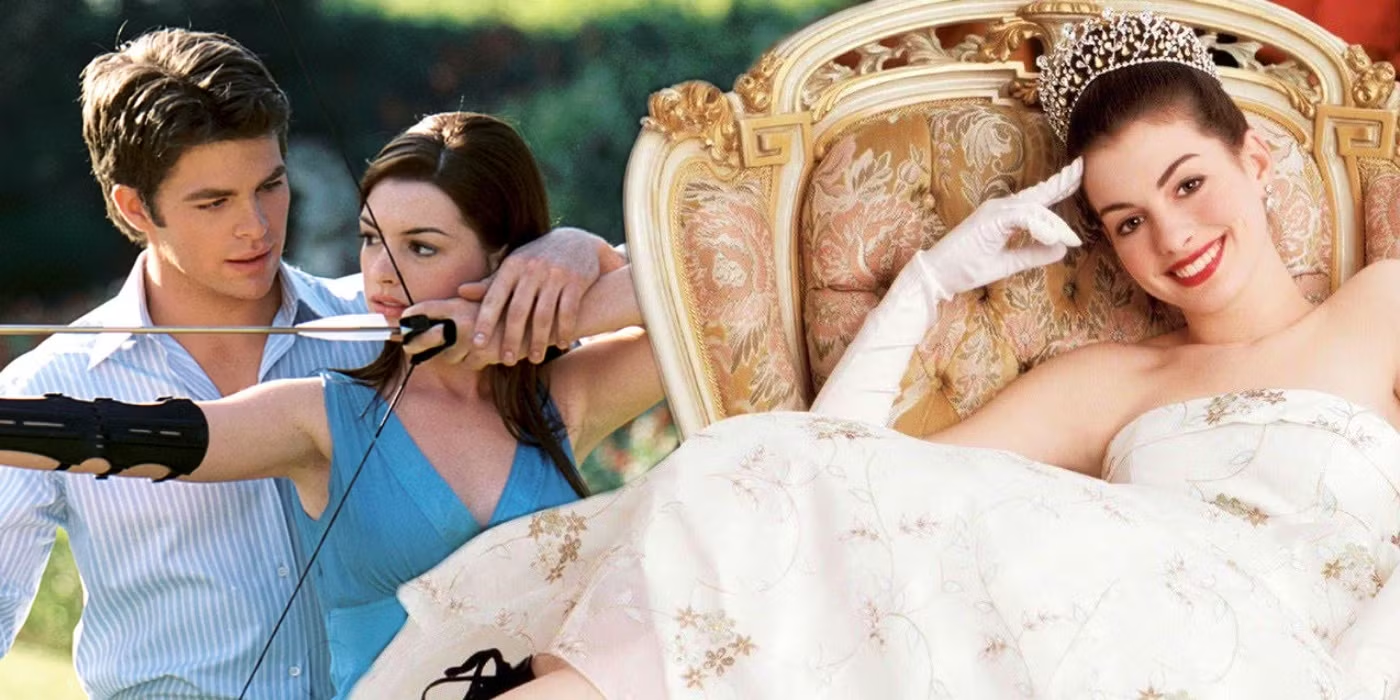
Themes of Identity, Duty, and Modern Royalty
If there’s one reason The Princess Diaries 3 has the potential to stand out, it’s its thematic depth.
The film is expected to explore three core ideas:
1. Identity in a Public World
Mia has always struggled with who she is versus who she is expected to be. As queen, that conflict intensifies. Every decision is scrutinized. Every mistake becomes history.
2. Duty vs. Personal Happiness
Can a ruler prioritize love and personal fulfillment? Or must sacrifice define leadership? This tension could shape the emotional core of the story.
3. Redefining Royalty
Modern audiences no longer view royalty through a purely romantic lens. There’s increasing awareness of politics, accountability, and social responsibility.
Mia’s journey may reflect this shift—transforming Genovia from a fairy tale kingdom into a symbol of progressive leadership.
Why This Sequel Could Succeed Where Others Fail
Legacy sequels are risky. Many rely too heavily on nostalgia without offering anything new.
However, The Princess Diaries 3 has a distinct advantage: its character naturally evolves with time.
Unlike forced continuations, Mia’s story demands progression. Her transition from princess to queen is not optional—it’s inevitable.
This gives the film a strong narrative foundation.
Additionally, Disney’s decision to continue the original timeline (rather than rebooting) preserves emotional continuity. Fans are not being asked to start over—they are being invited back.
The Power of Nostalgia in a Modern Market
Nostalgia remains one of the most powerful tools in entertainment.
Franchises like Top Gun: Maverick have proven that revisiting beloved characters can lead to massive success—if handled correctly.
The Princess Diaries 3 taps into a similar emotional space:
- Viewers remember where they were when they first watched Mia’s transformation
- The characters feel personal, almost like old friends
- The story carries emotional weight built over years
But nostalgia alone isn’t enough. The film must justify its existence by offering something meaningful.
That’s where its focus on growth, responsibility, and leadership becomes essential.
Release Expectations and Development Status
As of now, The Princess Diaries 3 is officially in development, though details remain limited.
What we do know:
- The project is being carefully developed to meet fan expectations
- The creative team aims to honor the original films while introducing a fresh direction
- No official release date has been confirmed
This slow approach may actually benefit the film. Rushed sequels often fail because they prioritize speed over quality.
Here, patience could be the key to success.
Final Thoughts: A Crown That Carries More Than Power
The Princess Diaries 3 has the potential to become more than just a nostalgic return. It could redefine what a “princess story” looks like in today’s world.
Because this time, the crown isn’t a symbol of fantasy.
It’s a symbol of responsibility.
And responsibility is far more compelling.
If executed well, the film could resonate across generations—bridging the gap between youthful dreams and adult realities. It could remind audiences that growth doesn’t end with transformation. In many ways, that’s where the real story begins.
So whether you grew up watching Mia stumble through royal lessons or you’re discovering Genovia for the first time, one thing is certain:
The crown returns.
And with it comes a story worth telling.