The Last Dance of the Evening
Near the edge of the room stood a wealthy man named Richard Hale. Beside him sat his twenty-five-year-old daughter, Emma, in a wheelchair. She wore a pale blue dress, her hair falling softly over her shoulders, but her hands rested nervously in her lap.
Everyone greeted Richard with respect. They shook his hand, complimented his daughter, and then quickly turned away, unsure how to speak to a young woman in a wheelchair without pity in their eyes.
Emma noticed everything.
She noticed the couples dancing. She noticed the way her father always answered for her. She noticed how people looked at the chair before they looked at her face.
Then a small boy walked into the room.
He was about eight years old, wearing an old jacket and shoes that had clearly seen too many streets. He did not belong to the world of chandeliers and champagne. A few guests frowned when they saw him near the dance floor.
But the boy kept walking.
He stopped in front of Emma and gave a shy little bow.
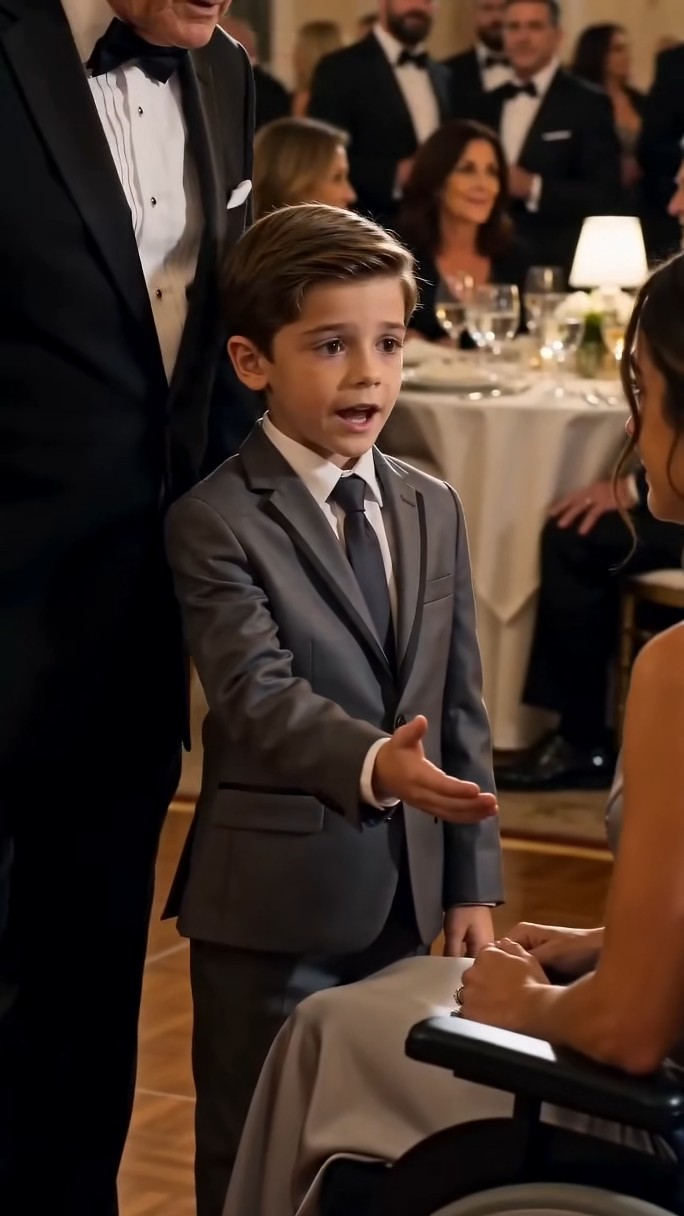
“Will you dance with me?”
The music seemed to soften.
Richard immediately stepped forward.
“She can’t dance,” he said sharply. “Go away.”
The boy looked up at him, but he did not move.
“With respect, sir,” he said, “the last word should be hers.”
A quiet wave moved through the room.
Richard’s face tightened.
“She doesn’t need strangers making her feel worse.”
Emma looked at her father, then at the boy. For years, people had spoken around her, over her, for her. They decided when she was tired, when she was afraid, when something was “too much” for her. Even love had become a cage.
The boy stretched out his hand carefully.
“I won’t let go,” he whispered.
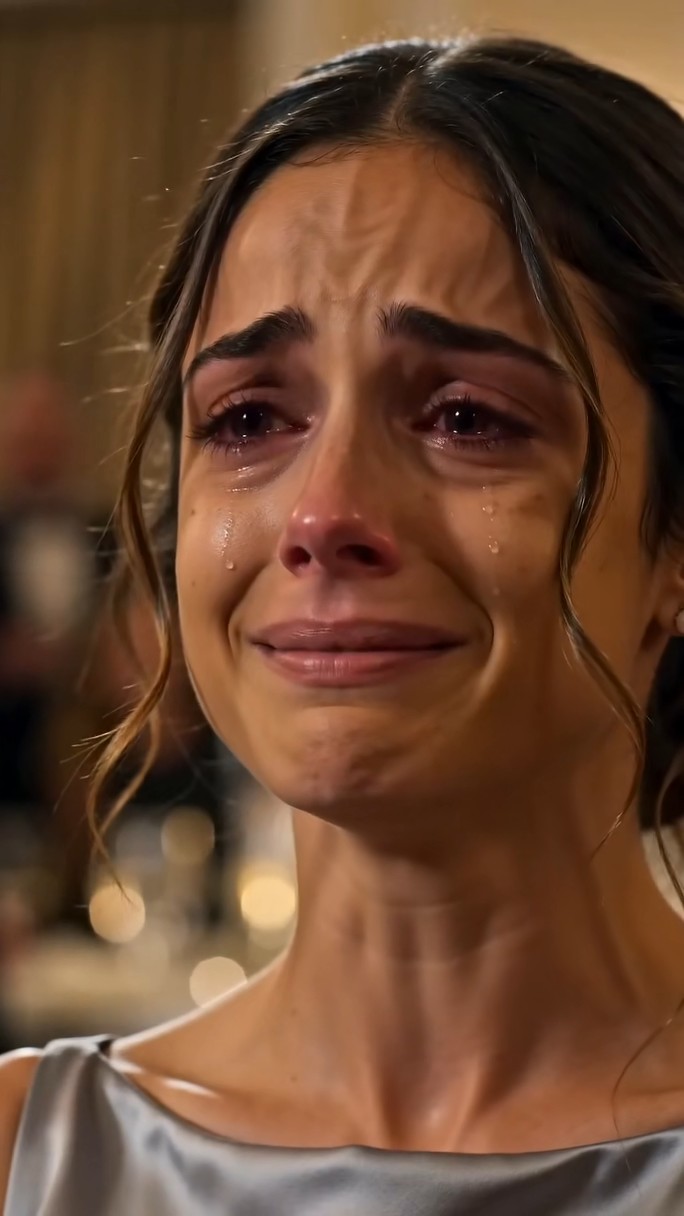
Emma’s eyes filled with tears.
“Dad…” she said softly. “I want to try.”
Richard turned toward her, stunned.
“Emma, no.”
But she was already reaching for the boy’s hand.
The room fell silent.
Slowly, with effort, Emma placed one hand on the armrest and the other in the boy’s small hand. Another guest stepped closer, ready to help, but Emma shook her head. She wanted this moment to be hers.
She rose carefully.
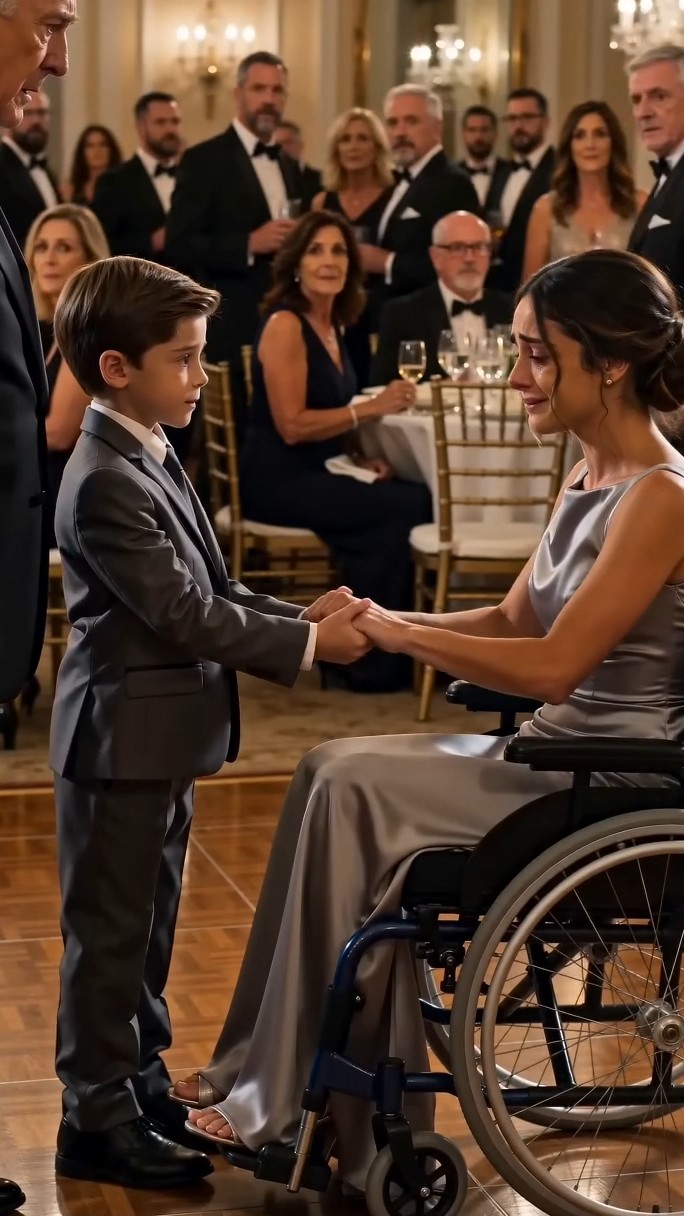
Not perfectly. Not easily. But she rose.
A quiet gasp passed through the ballroom.
The boy held her hand with both of his. Emma took one slow step. Then another. Her dress moved gently as the orchestra continued playing, now quieter, almost afraid to disturb her courage.
She did not dance like the women in the center of the room.
She danced like someone taking back a piece of herself.
Richard stood frozen.
He remembered the doctors saying she might stand again one day with support, if she wanted to, if she trusted herself, if fear did not become stronger than hope. But after the accident, he had decided protection meant stopping every risk.
He had never asked what Emma wanted.
The boy smiled at her.
“You’re doing it.”
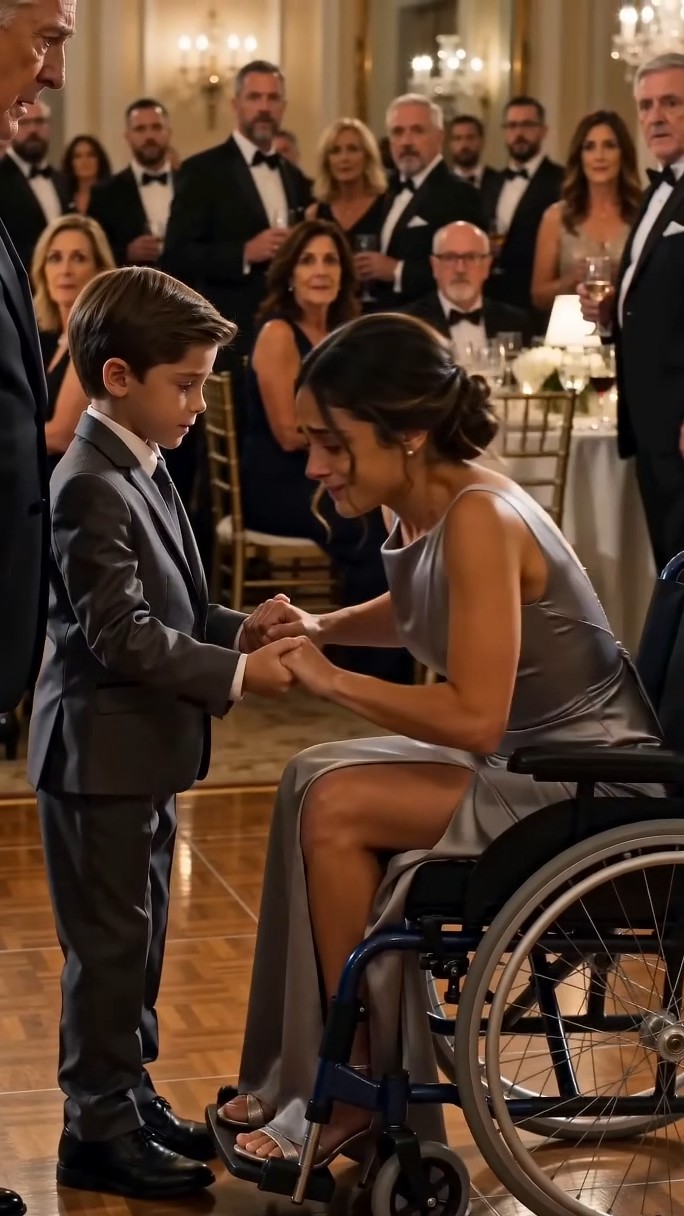
Emma laughed through tears.
“I know.”
The guests began to clap softly. Not loudly, not like a performance—but with the tenderness of people watching something honest.
When the music ended, Emma slowly sat back in her chair. The boy bowed again, proud and shy.
Richard came closer, his eyes wet.
“You told me you couldn’t…”
Emma looked up at him.
Her voice trembled, but it was clear.
“I couldn’t while everyone was deciding for me.”
The words struck him harder than any accusation.
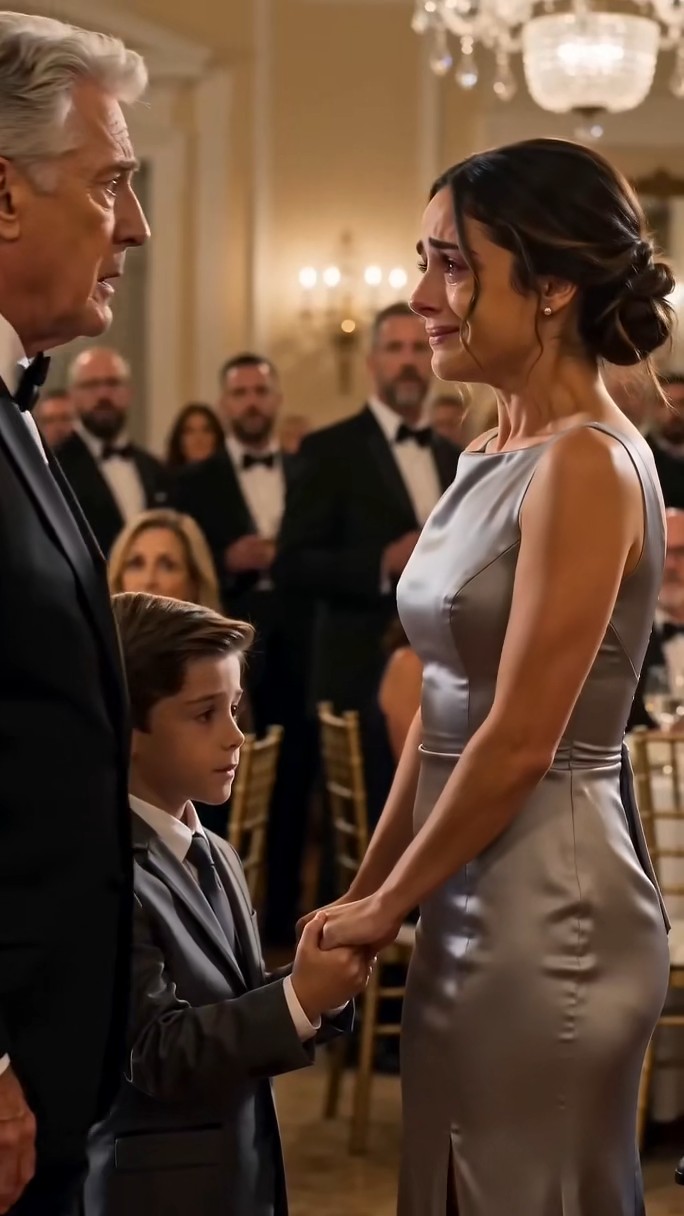
Richard knelt beside her chair for the first time in years, not as a man protecting someone fragile, but as a father finally listening.
“I’m sorry,” he whispered.
Emma held his hand.
“Then ask me next time.”
Across the room, the little boy quietly turned to leave, but Emma called after him.
“Wait.”
He looked back.
She smiled.
“You still owe me the next dance.”
And for the first time that evening, the whole ballroom smiled with her.