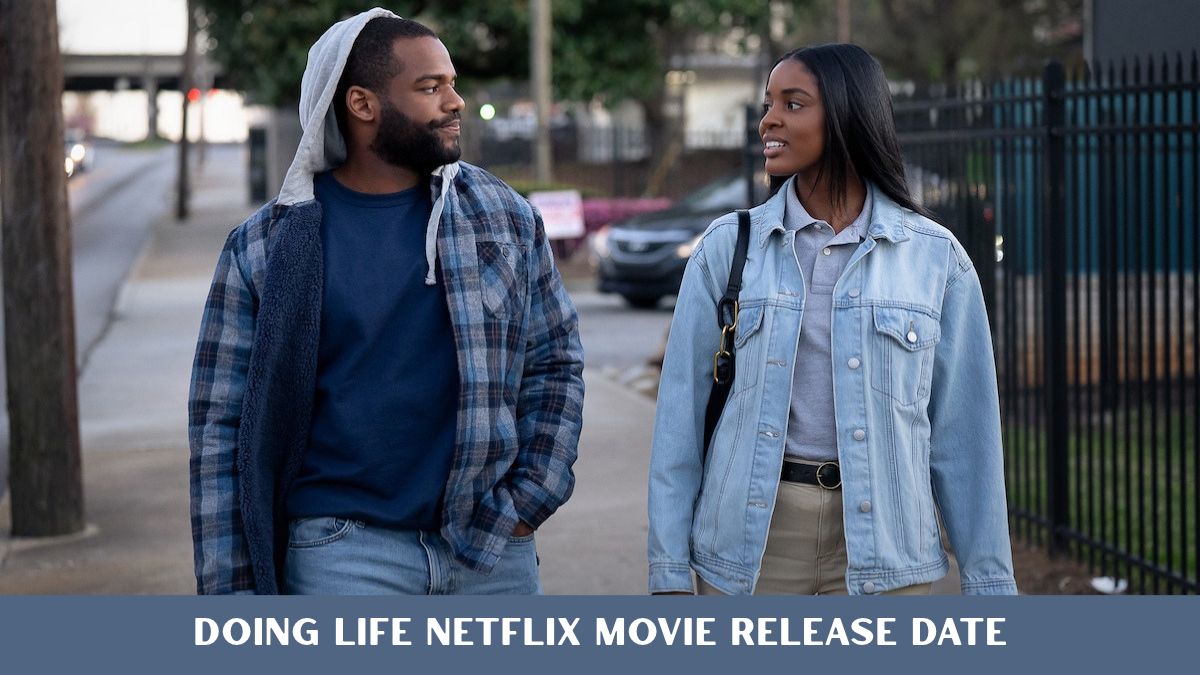
Tyler Perry’s Doing Life arrives on Netflix on October 2, 2026, bringing together Naomi Baker and Jay Reeves in an intimate drama about love, incarceration, motherhood, regret, and the possibility of rebuilding a life after devastating mistakes. Written, directed, and produced by Tyler Perry, the film centers on an unlikely relationship between a single mother and a reformed ex-convict, transforming a familiar redemption story into a more personal exploration of how people learn to see one another beyond their pasts.
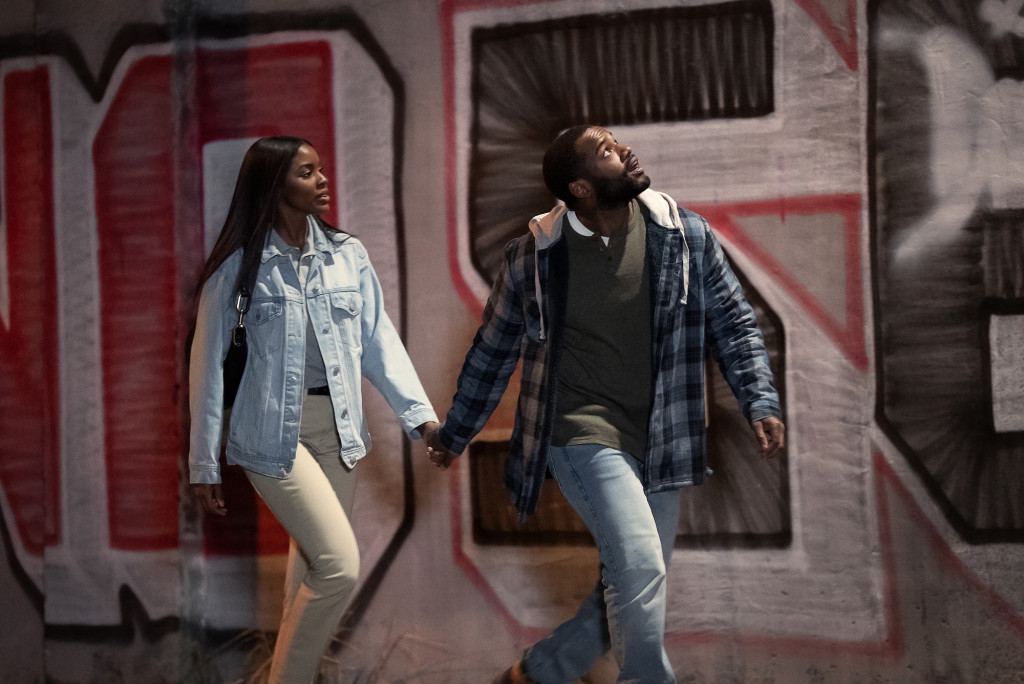
At the center of the story is Anika, played by Naomi Baker, a single mother whose life is dominated by responsibility. She is attempting to provide for her children while navigating the emotional and financial pressures that leave little room for herself. Her circumstances make her more than a conventional romantic protagonist: she represents someone who has learned to survive by suppressing her own needs.
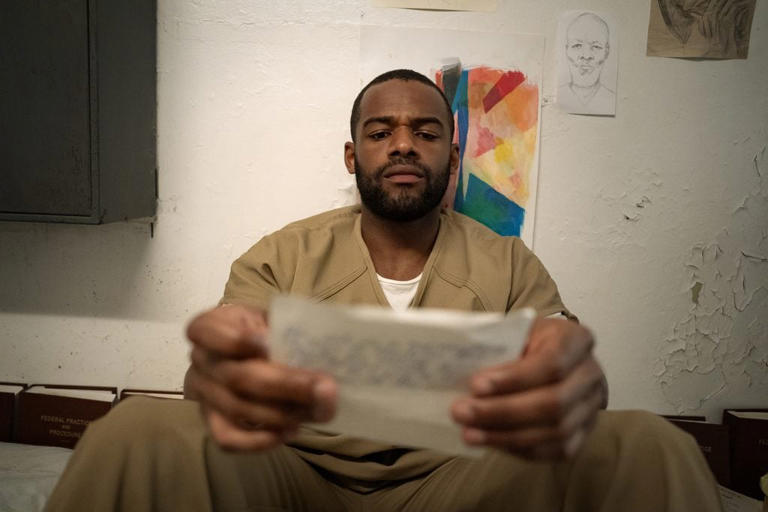
Jay Reeves plays Carousel, an incarcerated man whose past has placed an enormous barrier between himself and the future he wants. Netflix describes him as a reformed ex-con with untapped talent, while Tyler Perry has explained that the character was designed to explore whether someone who has committed a serious crime can still earn the possibility of redemption.
The film’s central relationship is especially intriguing because it does not begin with an uncomplicated romantic encounter. According to the trailer coverage, Anika previously worked as a prison officer and encountered Carousel during a violent prison riot, when he helped save her. Their lives later intersect again, allowing an old moment of danger to evolve into something far more emotionally complicated.
That history gives Doing Life a potentially powerful dramatic foundation. The romance is not simply about two people falling in love. It asks whether trust can develop when one person carries the burden of incarceration and the other carries the responsibilities of motherhood and the fear of making another mistake.
One of the movie’s most compelling themes is the difference between being judged and being understood. Carousel’s criminal record creates an immediate definition of his identity in the eyes of society. Anika, meanwhile, faces a different kind of invisibility: the exhaustion of a woman whose personal dreams have been pushed aside by survival.
Perry has said that the story was inspired by resilient people he has known, including single mothers and people returning from prison. He specifically described both groups as people who can be overlooked or unheard by society. That perspective could become one of the film’s strongest qualities because it gives the romance a social dimension without requiring the story to abandon its emotional core.
The letter-writing element further strengthens that idea. Netflix’s official synopsis describes the relationship as developing through heartfelt letters, creating a space where the characters can reveal themselves gradually. In cinematic terms, correspondence can be an effective storytelling device because it removes many conventional distractions. Instead of relying entirely on physical attraction, the relationship can develop through confession, vulnerability, humor, memory, and imagination.
Yet this structure also exposes one of the film’s biggest creative risks.
A romance built around letters can become emotionally repetitive if the screenplay does not continually deepen the characters. The central question is whether Anika and Carousel are falling in love with the real person or with the version of that person created through words. That distinction could provide Doing Life with its most interesting dramatic conflict once their relationship moves beyond emotional correspondence and into everyday life.
The movie therefore has a potentially revealing “góc khuất”: redemption is easy to romanticize when viewed from a distance.
Carousel’s transformation cannot simply depend on Anika believing in him. If the film wants his redemption to feel convincing, it must show responsibility, consequences, patience, and difficult choices. Tyler Perry has emphasized that Reeves needed to make Carousel redeemable while acknowledging his attempted-murder conviction and responsibility for his past. That creates a demanding role for Reeves, because the character must be sympathetic without making the seriousness of his history disappear.
Naomi Baker faces an equally important challenge. Anika cannot become merely the woman who “saves” a troubled man. Her own emotional journey needs equal weight. Her children, family pressures, economic struggles, and personal boundaries should remain central to her decisions.
This balance may ultimately determine how audiences respond to the film.
There is also a practical reason to expect Doing Life to attract significant attention on Netflix. Tyler Perry already has an established relationship with the platform, with projects including A Fall from Grace, A Madea Homecoming, A Jazzman’s Blues, Mea Culpa, The Six Triple Eight, Straw, and Madea’s Destination Wedding. His name therefore gives Doing Life an immediate audience-recognition advantage, even though the film is built around two leads who are less established as traditional Hollywood headliners.
The casting strategy is particularly interesting. Perry has said he wanted to continue championing newer performers, identifying Baker and Reeves as actors capable of carrying emotionally demanding central roles. That could allow the film to feel less dependent on celebrity recognition and more dependent on character chemistry.
The supporting cast includes Tamberla Perry, Karen Obilom, Jasmine Sargent, Lucky Johnson, and Danielle Moné Truitt, adding additional dramatic texture around the central relationship.
Predicting the film’s success requires looking beyond traditional theatrical box-office measurements. Doing Life is fundamentally a streaming release, so its strongest commercial potential lies in audience engagement, completion rates, word of mouth, and its ability to become part of Netflix’s conversation around emotional dramas. Its October 2 release also places it in a crowded Netflix schedule, alongside numerous new films and returning series.
The biggest opportunity is therefore emotional accessibility. A story involving single parenthood, incarceration, forgiveness, and second chances can connect with viewers across different backgrounds because its central question is universal: Can someone become more than the worst thing they have ever done?
The biggest danger is equally clear. If the movie simplifies incarceration, romanticizes redemption, or allows love to erase consequences, some viewers may find its emotional message too convenient. The strongest version of Doing Life would instead acknowledge that second chances are not the same as second lives. Trust must be rebuilt. Families must adapt. Old wounds do not disappear because two people fall in love.
That tension gives the film its greatest potential.
Ultimately, Tyler Perry’s Doing Life appears positioned as more than a conventional prison romance. It is a story about two people who have both been trapped by circumstances—one by social responsibility, the other by a criminal past—and who discover that connection can create an opening toward something different. Whether that opening becomes a convincing transformation will depend on how honestly the film handles its characters after the romance begins.
For Netflix audiences looking for an emotionally charged drama about love, family, incarceration, and redemption, Doing Life has several elements capable of generating strong discussion. Its most important story may not be whether Anika and Carousel end up together, but whether they can become people capable of building a life that neither of them previously believed was possible.