
The End of the Game Is the Beginning of the Man
For eight seasons, All American has told a story that looked like a sports drama but behaved like something far more intimate. It was never just about football. Football was the stage. Identity was the conflict. Choice was the cost.
As All American enters its final season in 2026, the series does something rare in modern television: it slows down. Instead of chasing spectacle, it reflects. Instead of building toward one last championship, it asks a quieter, more difficult question—who are these characters when the game no longer defines them?
Season 8 is not a victory lap. It is a reckoning.

Spencer James: Beyond the Jersey
Spencer James began as a prodigy, but his true journey was never athletic. From South Crenshaw to Beverly Hills, from high school stardom to adulthood, Spencer’s arc has always been about navigation—between worlds, expectations, and versions of himself.
By the time Season 8 begins, Spencer is no longer chasing a dream blindly. He is confronting the weight of having achieved it. Daniel Ezra’s absence as a full-time presence paradoxically strengthens the season’s emotional core. Spencer becomes less a character and more a legacy—his influence shaping every decision around him.
This final season understands that adulthood does not arrive with clarity. It arrives with responsibility. Spencer’s story becomes less about proving his worth and more about protecting what he has built.

Football as a Language, Not a Destination
In its early years, All American used football as propulsion. Wins mattered. Losses stung. Rivalries defined identity. In Season 8, football becomes something else entirely—a shared language between characters who are learning to let go.
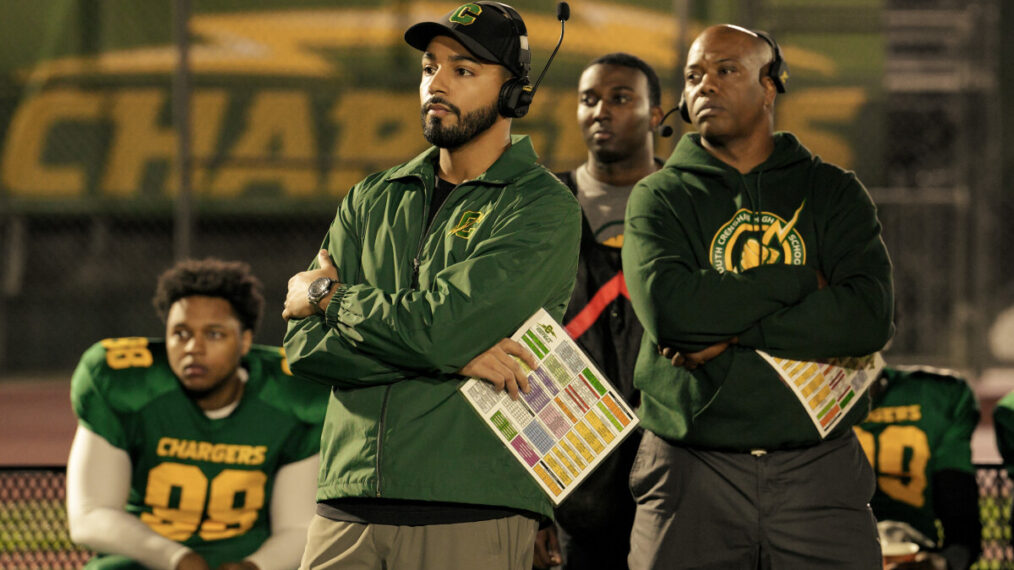
The series does not abandon the sport. It reframes it. Practices feel quieter. Games carry emotional rather than competitive stakes. The camera lingers not on touchdowns, but on faces—parents in the stands, teammates on the sidelines, friends realizing that this chapter is closing.
Football becomes memory in real time.
Community as the True Protagonist
One of All American’s most underrated achievements is its portrayal of community. South Crenshaw and Beverly Hills are not backdrops—they are living ecosystems shaped by inequality, loyalty, and shared history.
Season 8 leans heavily into this truth. The show recognizes that individual success does not erase communal responsibility. Characters are forced to ask whether leaving means abandoning, and whether staying means stagnation.
The series refuses to offer simple answers. Instead, it presents community as something that must be carried forward, even when geography changes.
A Final Season Without Villains
There is no central antagonist in Season 8. No single threat. No defining enemy.
The conflict is internal, diffuse, and deeply human: fear of irrelevance, fear of regret, fear of becoming disconnected from the people who shaped you.
This creative choice elevates the season. Without villains, every character becomes accountable. Growth is no longer reactive—it is chosen.
Cinematic Restraint and Emotional Precision
Visually, All American adopts a softer tone in its final season. Lighting is warmer. Camera movement is steadier. The series trusts its performances enough to let scenes breathe.
Music is used sparingly, often allowing silence to do the work. This restraint reflects the maturity of the story. The show understands that endings do not need fireworks. They need honesty.
Conclusion
ALL AMERICAN (2026) does not end with a whistle. It ends with understanding.
The final season honors the truth that dreams change shape, that success does not resolve identity, and that growth often requires letting go of who you were in order to become who you are.
The game ends.
The man remains.