A Christmas Comeback Nobody Should Trust
Christmas has never been a peaceful time for Willie Soke. While most people associate the holiday season with generosity, family gatherings, and cheerful celebrations, Willie sees it as an opportunity for easy money, questionable decisions, and another excuse to avoid becoming a better person. In BAD SANTA 3: LAST CHRISTMAS, the notorious holiday criminal returns for what may be his most outrageous Christmas adventure yet. Older, more cynical, and still remarkably irresponsible, Willie discovers that escaping his past is considerably harder than putting away a Santa suit.
Billy Bob Thornton reprises his role as the foul-mouthed antihero, bringing back the uncomfortable humor and unpredictable attitude that made Willie such an unusual Christmas character. This time, however, the stakes are higher. A seemingly perfect opportunity to make one final fortune pulls Willie into a luxury resort filled with wealthy guests, valuable treasures, and a charity auction that hides a deeply troubling secret. What begins as another robbery soon becomes a chaotic mission against criminals whose behavior makes Willie’s own history look almost respectable.
With Tony Cox returning as Marcus and Brett Kelly reprising his role as Thurman, Bad Santa 3: Last Christmas brings its familiar characters together for a darkly comic story about greed, second chances, and the complicated meaning of doing something decent.
One Last Job, One Terrible Idea
Willie has spent years trying to leave his Christmas criminal career behind. The shopping malls, fake beards, holiday decorations, and carefully planned robberies are supposed to belong to another chapter of his life. Unfortunately, his attempts to establish something resembling stability have not exactly produced impressive results. Financial problems remain, his attitude has not improved, and his ability to make sensible decisions is still practically nonexistent.
When an opportunity emerges involving an exclusive luxury holiday resort, Willie sees an answer to his problems. The property is preparing to host a glamorous charity auction, attracting wealthy donors and business figures while millions of dollars in cash, jewelry, and other valuable possessions move through the venue. For someone with Willie’s experience, the event appears to offer everything necessary for a profitable final operation.
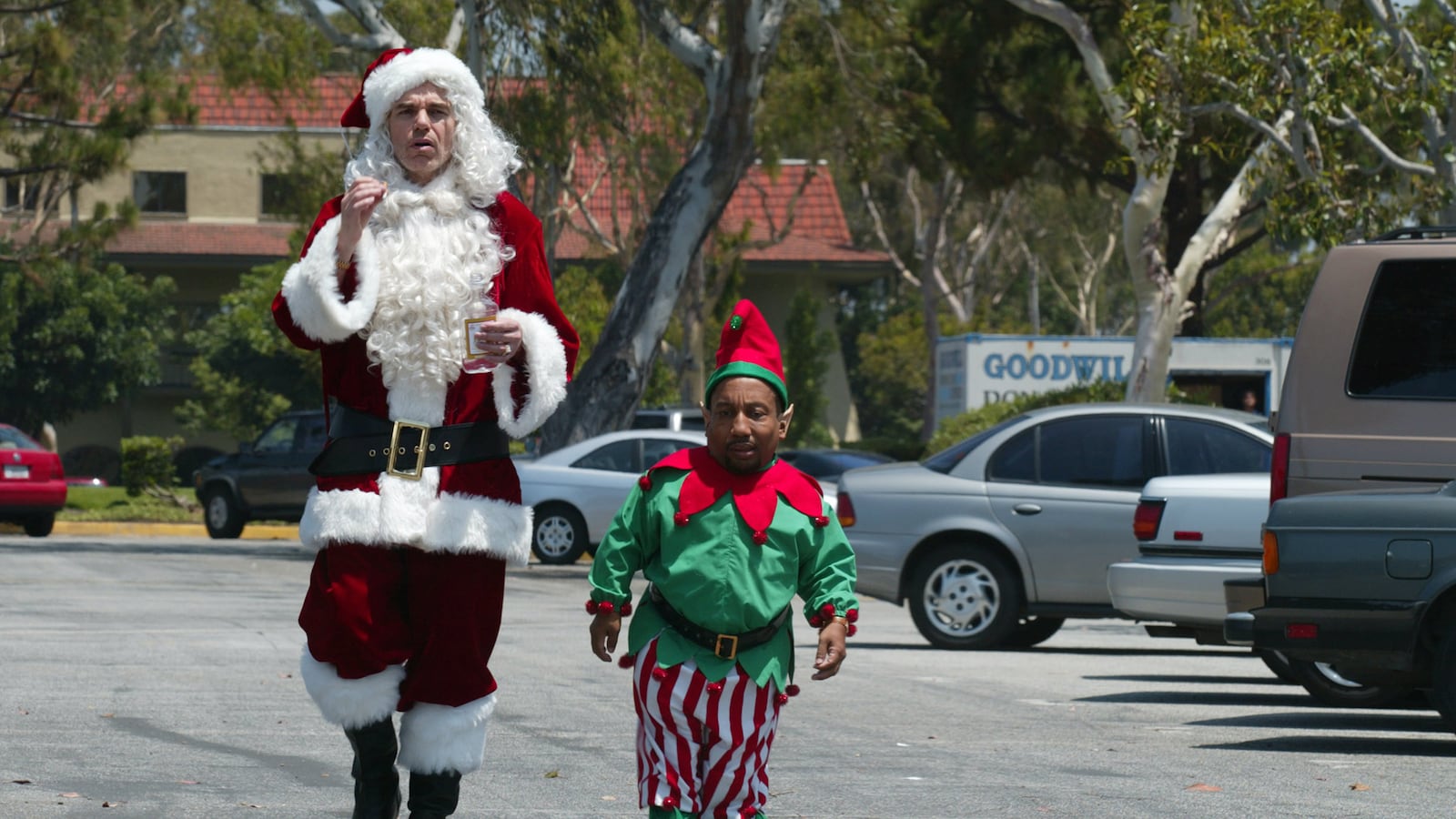
The plan sounds straightforward: enter the resort disguised as Santa, gain access to the event, steal the valuables, and disappear before anyone understands what happened. It is exactly the kind of arrangement Willie believes he can handle.
Naturally, the simplicity of the plan does not last.
The resort’s carefully polished atmosphere conceals a complicated operation, and the people responsible for organizing the charity auction are not the generous benefactors they pretend to be. As Willie begins examining the situation, he discovers that the organization is exploiting struggling families through an elaborate financial scam. The revelation transforms his intended robbery into something far more complicated.
For once, Willie finds himself looking at criminals whose actions are difficult even for him to appreciate.
Marcus Returns to the Wrong Kind of Christmas
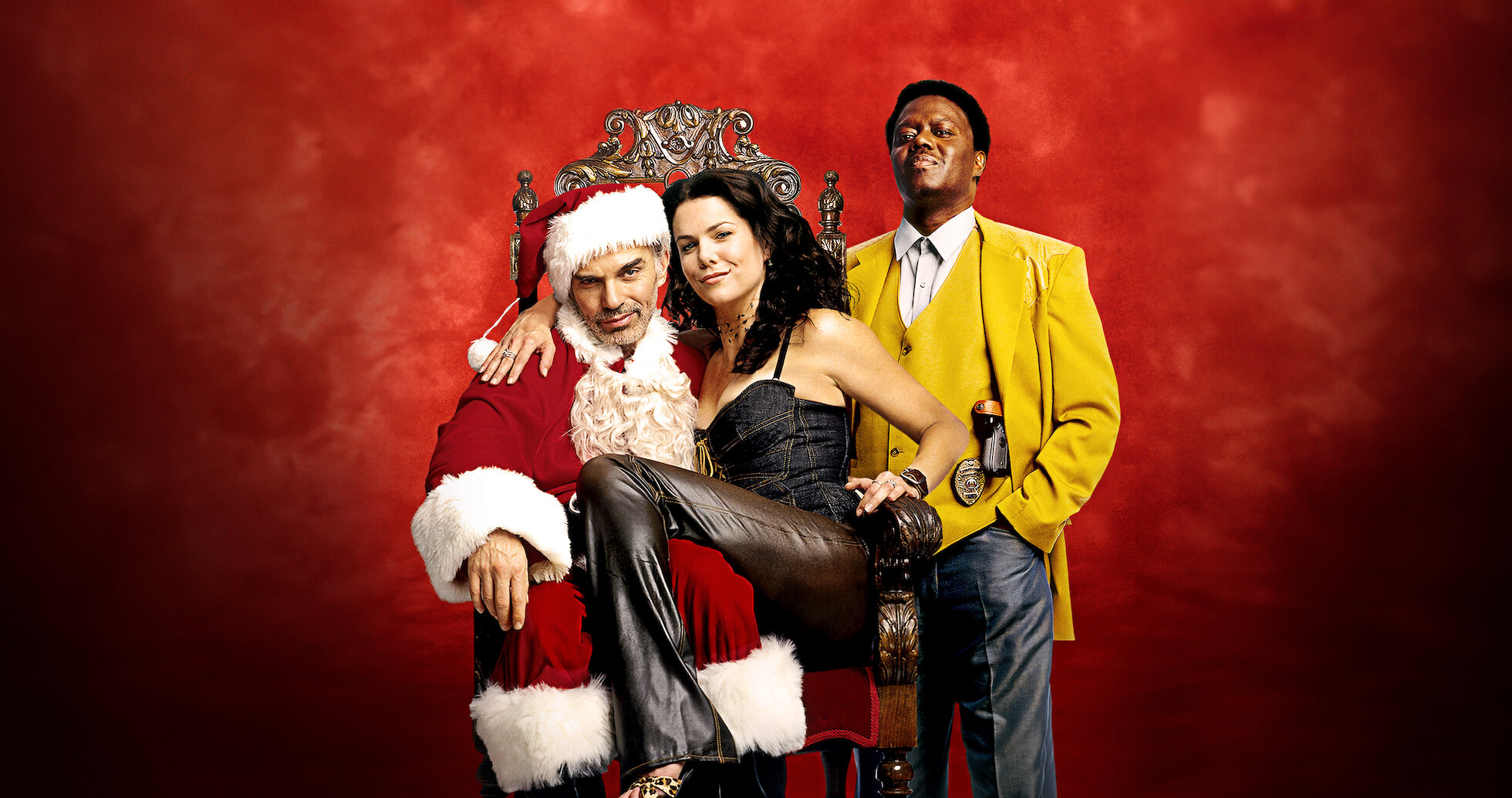
Tony Cox returns as Marcus, Willie’s former partner and one of the few people who understands just how disastrous his decisions can become. Their relationship has always depended on an uneasy combination of familiarity, frustration, and shared criminal experience. Marcus knows that working with Willie rarely ends according to plan, yet the promise of substantial money remains difficult to ignore.
In Last Christmas, Marcus once again becomes the reluctant voice of reason. He recognizes the risks surrounding the resort operation and understands that stealing from wealthy criminals with private security is considerably more dangerous than an ordinary holiday robbery. Nevertheless, his practical instincts compete with the possibility of a financial reward large enough to change his circumstances.
The partnership creates opportunities for the film’s sharpest comedic exchanges. Marcus attempts to maintain some degree of control while Willie repeatedly introduces unnecessary complications. Their disagreements are not simply about the robbery itself. They also reflect the different ways both men have learned to survive: Marcus wants a manageable opportunity, while Willie seems almost incapable of resisting a terrible idea.
Their chemistry gives the story a familiar foundation while allowing the characters to face a new kind of challenge.
Thurman and the Uncomfortable Possibility of Change
Brett Kelly returns as Thurman, now an adult whose understanding of Willie has developed beyond the unusual childhood connection that shaped their earlier relationship. Thurman still believes there is something decent beneath Willie’s miserable exterior, even when Willie makes every possible effort to prove otherwise.
His presence introduces an important emotional dimension to the story. Thurman is not interested in celebrating Willie’s criminal abilities or pretending that his behavior is acceptable. Instead, he represents the possibility that a person can be more complicated than the worst decisions they have made.
When Thurman becomes unexpectedly caught in the unfolding operation, Willie faces a problem that cannot be solved simply by stealing something valuable and leaving town. His involvement makes the consequences personal. Willie must consider whether protecting someone else is worth sacrificing the money and freedom he originally wanted.
The relationship also creates room for understated comedy. Thurman’s sincere outlook frequently clashes with Willie’s cynical observations, producing exchanges that reveal how little the older man has changed. Yet beneath the insults and awkward conversations, their connection remains meaningful.
Thurman may believe Willie can do better, but the film does not require Willie to become a completely different person. Its more interesting question is whether he can make one worthwhile decision without suddenly becoming someone he does not recognize.
A Charity Auction Built on Deception
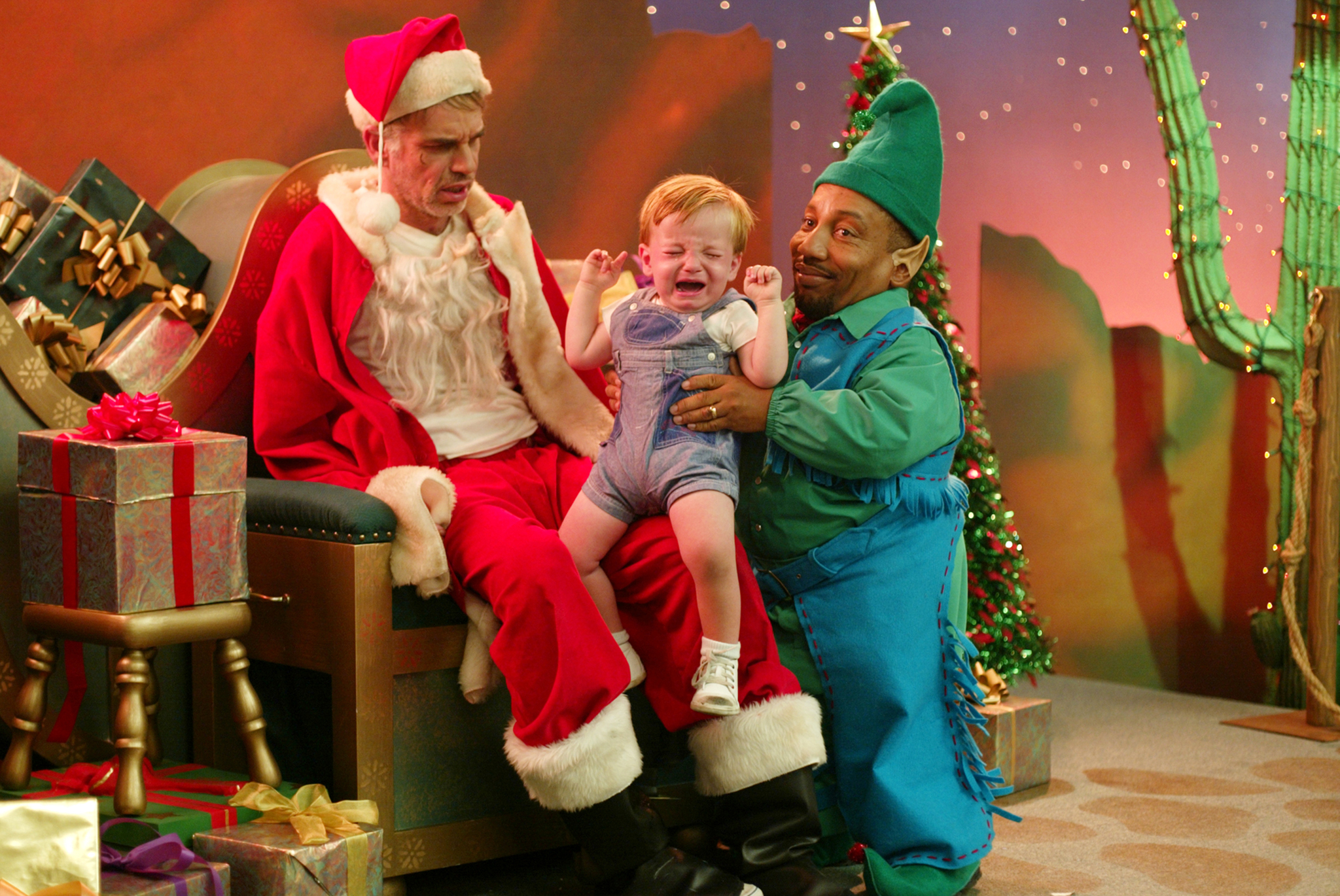
The luxury resort provides a striking contrast to the familiar shopping malls and ordinary holiday settings associated with Willie’s earlier adventures. Its elegant decorations, expensive accommodations, exclusive guest list, and carefully managed charity event create an environment where appearances are everything.
Behind the festive presentation, however, lies a financial scheme targeting families already struggling to make ends meet. The charity’s public image depends on generosity and goodwill, but its organizers use that reputation to conceal their exploitation.
This discovery gives the story a sharper satirical direction. The wealthy executives and influential guests present themselves as respectable members of society, yet their actions reveal a level of dishonesty that Willie recognizes immediately. The difference is that they have built an entire business around making their greed appear respectable.
As Willie decides to steal from the thieves themselves, the operation becomes increasingly complicated. Corrupt executives, private security personnel, and suspicious guests threaten to expose the scheme before he can complete his plan. Every new obstacle creates another opportunity for disastrous improvisation.
The film uses this increasingly absurd situation to explore the distance between public respectability and genuine morality. Willie is hardly an example of good behavior, but the people controlling the charity have turned dishonesty into a polished enterprise.
Dark Comedy with a Holiday Edge
The appeal of Bad Santa 3: Last Christmas comes from its willingness to approach Christmas through an unconventional perspective. Rather than presenting a perfectly cheerful holiday adventure, the film builds comedy from uncomfortable situations, flawed personalities, bad decisions, and the contrast between festive surroundings and deeply unpleasant behavior.
Willie’s return to the Santa suit becomes more than a nostalgic detail. It represents the identity he has repeatedly tried to escape, even though he continues to find himself drawn toward the same opportunities and mistakes. The holiday setting gives the criminal story a distinctive visual atmosphere, while the resort’s extravagant celebrations provide an ideal backdrop for increasingly chaotic events.
The crime elements also give the comedy a stronger narrative engine. The robbery must develop beyond a simple attempt to steal money, creating tension as the characters discover that the operation is more dangerous and morally complicated than expected.
At its center, the film remains interested in imperfect people rather than traditional holiday heroes. Its humor comes from recognizing that good intentions do not always emerge in attractive forms.
The Least Terrible Person in the Room
The central question of BAD SANTA 3: LAST CHRISTMAS is not whether Willie will suddenly become a generous, respectable man. That transformation would contradict everything that makes the character distinctive. Instead, the story explores a smaller and more believable possibility: perhaps doing the right thing occasionally matters, even when the person doing it remains thoroughly unpleasant.
Willie’s decision to turn against the charity’s organizers does not erase his past. It does not make his criminal instincts disappear, and it certainly does not guarantee that his final operation will end peacefully. What changes is the reason behind his actions. For once, the people he intends to rob are doing considerably more harm than he is willing to tolerate.
As the resort descends into holiday chaos, Willie, Marcus, and Thurman must navigate the consequences of a scheme that has grown far beyond its original purpose. Their final Christmas adventure promises the outrageous comedy, criminal complications, and unlikely emotional moments that define the series.
With Billy Bob Thornton leading the returning cast, Bad Santa 3: Last Christmas delivers a darkly entertaining holiday story about a man who may never become good but can still recognize something truly rotten when he sees it.
Sometimes, the closest thing to a Christmas miracle is simply choosing to be the least terrible person in the room.