
Crystal Lake has never felt like an ordinary place.
At first, it looks peaceful. Tall trees surround the camp. Old cabins rest quietly among the shadows. At the center, the lake reflects the sky like a mirror.
However, calm does not always mean safety.
In this imagined first season of Crystal Lake, released this year, the story avoids loud horror. Instead, it builds fear slowly. It shows how silence, grief, and neglect can change a place long before violence begins.
This is not the story of a monster.
Rather, it is the story of how a legend is born.
A Place That Tries to Forget
Crystal Lake once served as a summer camp for children. Laughter filled the air. Music echoed across the water. For a short time, the place felt alive.
Then everything stopped.
After the drowning of a young boy, the camp closed. Over time, the town nearby tried to move on. People avoided difficult conversations. Local leaders chose quiet solutions instead of honest ones.
As a result, the truth never fully surfaced.
Season 1 focuses on this early stage. It shows a place that wants peace but refuses responsibility. Because of that choice, something unhealthy begins to grow.

Pamela Voorhees: A Woman Shaped by Loss
At the center of the season stands Pamela Voorhees.
She does not appear as a villain. Instead, she appears as a grieving mother trying to survive each day. She cleans. She works. She repeats routines that help her feel stable.
Yet grief follows her everywhere.
Pamela lost her son, Jason. No one gave her clear answers. No one accepted real blame. Over time, that silence becomes heavier than anger.
Because Pamela feels ignored, she begins to believe she must protect Jason’s memory herself. This belief slowly reshapes her sense of right and wrong.
The season treats her story with care. It shows her pain step by step. Therefore, her transformation feels tragic rather than sudden.
Jason Voorhees: More Memory Than Person
Jason does not dominate the screen in this season.
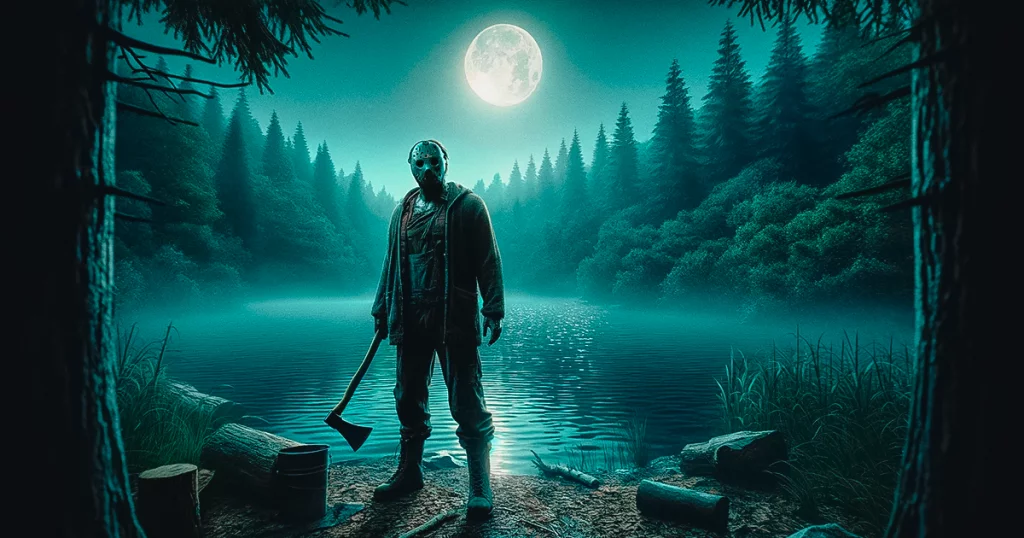
Instead, he appears through memory, reflection, and suggestion. Sometimes the camera lingers on the lake. Sometimes a sound carries across the water. At other times, a child’s silhouette appears in the distance.
The show never explains whether Jason truly watches or whether grief creates these moments. That uncertainty creates tension.
Meanwhile, the lake itself seems to remember him. Its still surface hides depth. Its calm appearance hides danger.
Because of this, Jason feels less like a character and more like a presence.
A Town That Chooses Silence
The nearby town plays an important role in Season 1.
The adults are not cruel. They are tired. They want normal lives. Therefore, they ignore warning signs. They rush safety checks. They accept small risks.
Unfortunately, small risks add up.
The season makes one point clear: horror does not always begin with evil. Often, it begins with avoidance. When people refuse responsibility, consequences follow.
This idea gives the story emotional weight.
Fear Built Through Atmosphere
Instead of constant action, the season uses atmosphere to build tension.
For example, long shots show empty cabins at night. Wind moves through trees without explanation. Water ripples when no one swims.
Music appears rarely. Silence fills most scenes. As a result, viewers focus on details. Every sound matters. Every pause feels intentional.
Fear grows slowly. It grows because the audience waits for something that may not arrive.
The Camp Attempts to Reopen
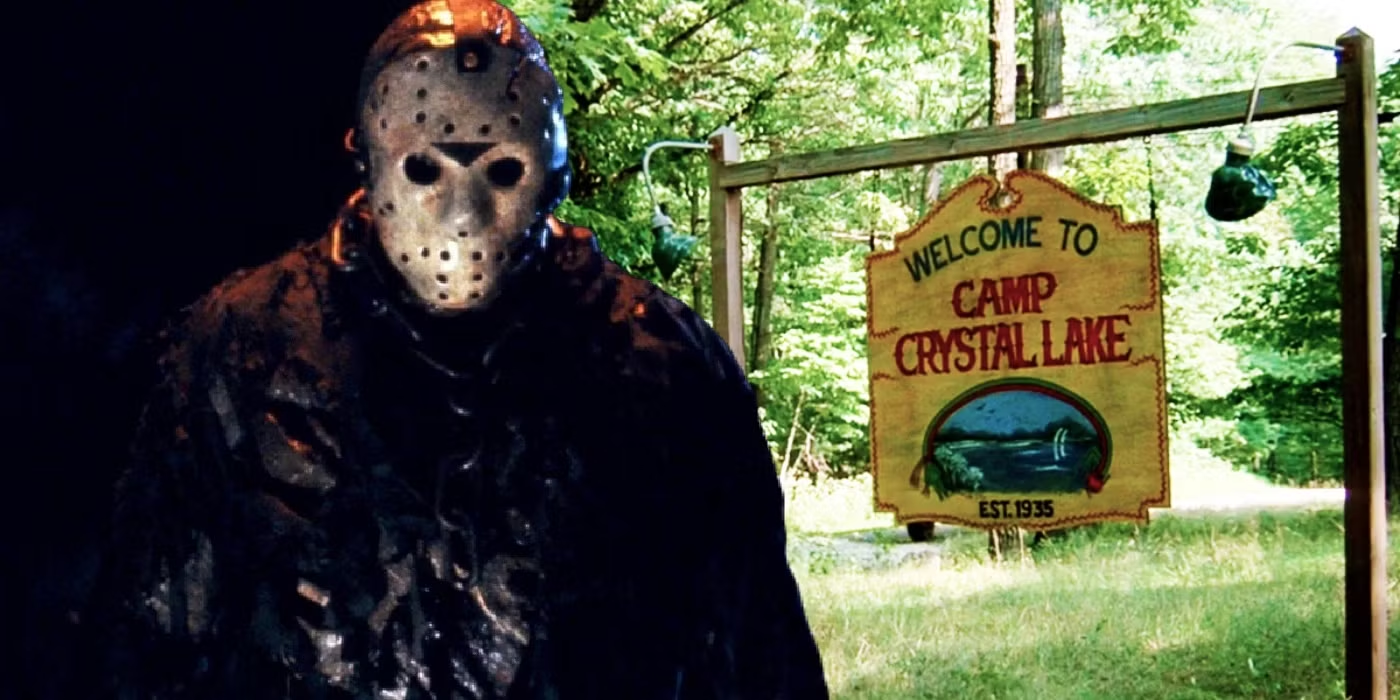
Midway through the season, the camp prepares to reopen.
On the surface, this decision feels hopeful. New counselors arrive. Repairs begin. Laughter returns for brief moments.
However, this progress disturbs Pamela deeply.
To her, reopening the camp feels like erasing Jason. Each repaired dock feels wrong. Each cheerful voice feels careless.
As tension rises, Pamela watches quietly. She listens. She remembers.
Because she believes the world failed her son once, she refuses to let it happen again.
Dreams, Memory, and Guilt
As the season continues, Pamela experiences vivid dreams.
Sometimes Jason appears calm. At other times, he seems distant. These moments feel emotional rather than supernatural. Still, they push Pamela closer to a breaking point.
The show avoids clear answers. Instead, it allows viewers to share Pamela’s confusion.
Is she guided by memory?
Or does grief distort her judgment?
This uncertainty strengthens the story.

The Lake as a Witness
Crystal Lake itself becomes a silent witness.
Characters stand near the water searching for peace. Others avoid it entirely. The lake never responds. It reflects the sky. It hides its depth.
After key moments, the camera often returns to the water. Nothing changes on the surface. This contrast makes events feel heavier.
The lake does not judge.
It remembers.
A Quiet but Powerful Ending
The final episodes do not rush.
Pamela reaches a moment of decision, not driven by rage but by belief. She convinces herself that protection requires action. In her mind, she acts out of duty.
The season ends with transformation rather than chaos. The audience understands that a boundary has been crossed.
The legend has not fully formed yet.
However, its foundation is set.
Why Season 1 Works
This imagined first season succeeds because it trusts simplicity.
It trusts silence.
It trusts emotion.
It trusts patience.
Instead of focusing on shock, it focuses on cause and effect. It shows how neglect shapes tragedy. It explains how grief, when ignored, becomes dangerous.
Most importantly, it reminds viewers that horror often begins quietly.
Conclusion: The Beginning of a Dark Legacy
Crystal Lake – Season 1 does not scream for attention. Instead, it settles into memory.
By the final scene, one truth becomes clear: the lake will never return to innocence. The past has found its voice.
And once silence breaks, it never fully returns.
⚠️ Disclaimer: This article is a fictional creative interpretation written for storytelling purposes only.