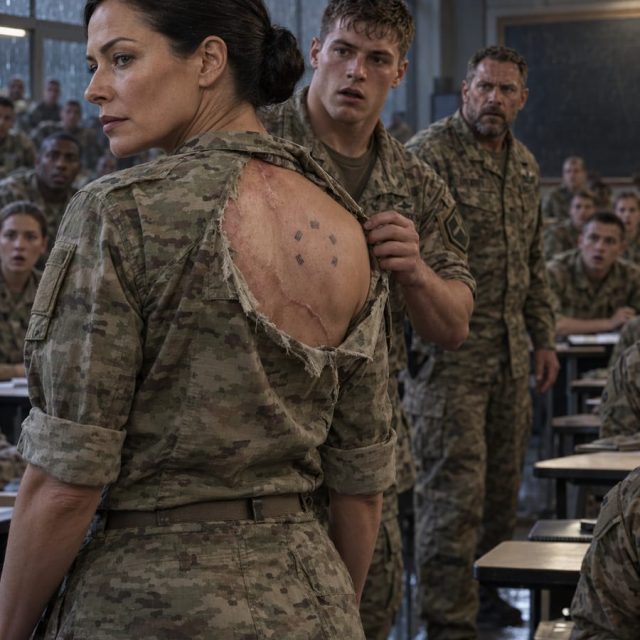
The tearing sound of my BDU shirt seemed louder than gunfire.
Two hundred recruits fell completely silent.
Marcus Caldwell’s hand was still clutching the ripped fabric at my shoulder when the smug look vanished from his face.
Underneath, black ink spread across scarred skin.
A skull.
Crossed rifles.
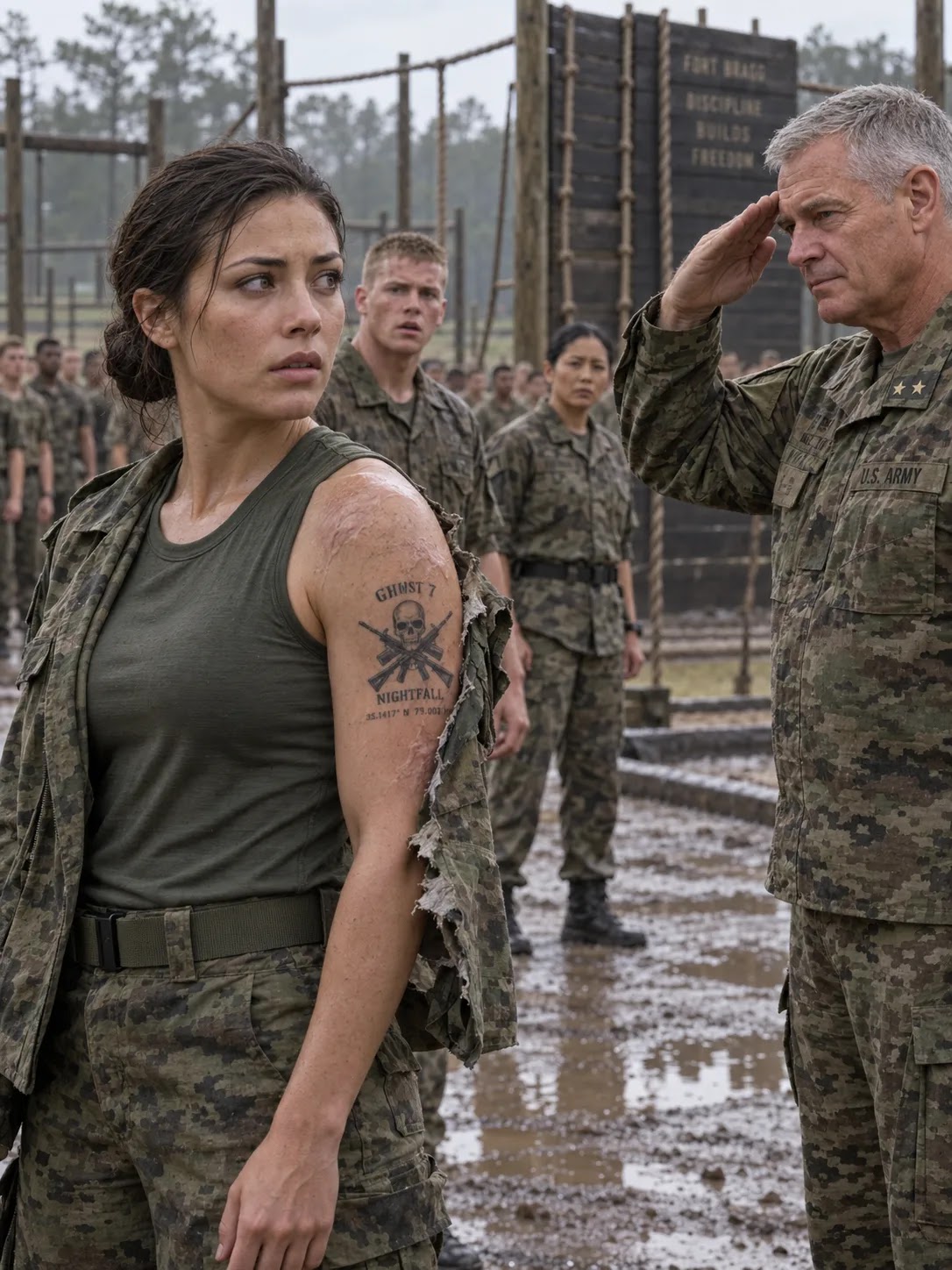
Two words.
GHOST 7.
Beneath them:
NIGHTFALL.
And below that, a line of coordinates.
Marcus had no idea what they meant.
But Private Diaz did.
His face went pale.
“Oh my God.”
I looked down.
For eighteen months, I had kept the tattoo covered.
Not because it was classified anymore.
Because it hurt less when nobody asked.
Marcus slowly released my shirt.
“What the hell is that?”
I didn’t answer.
The entire obstacle-course field had gone silent.
Even Sergeant Tanaka, who normally treated silence as wasted oxygen, wasn’t shouting.
Then the recruits began separating.
Someone was approaching from behind them.
At first I saw the stars on the uniform.
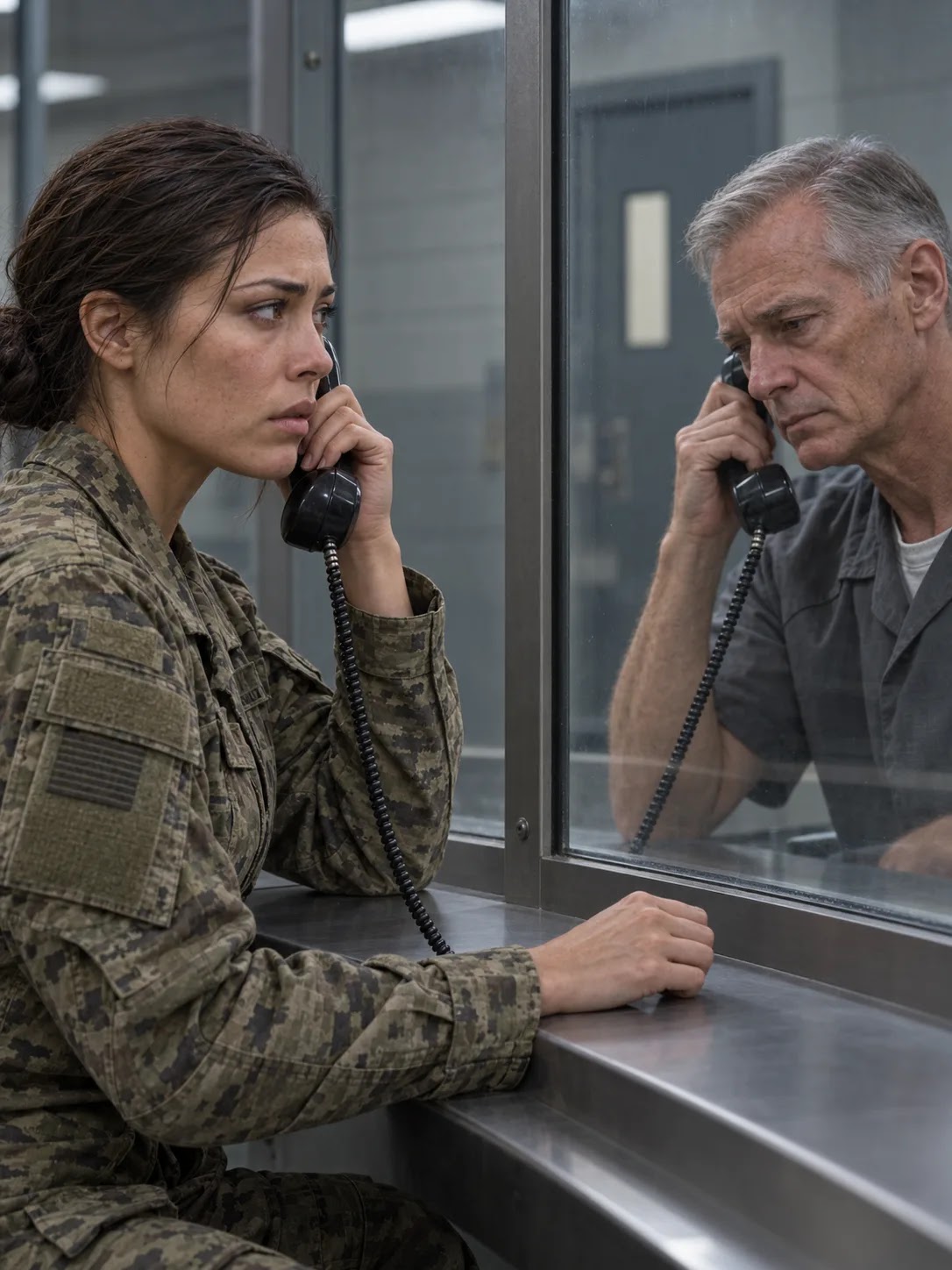
Then the face.
MAJOR GENERAL THOMAS MORRISON.
My stomach dropped.
Of all the people who could have been touring Fort Bragg that morning, it had to be him.
Morrison stopped six feet away.
He looked at me.
Not at my uniform.
Not at the recruits.
At me.
For one second, I was no longer standing on wet Carolina dirt.
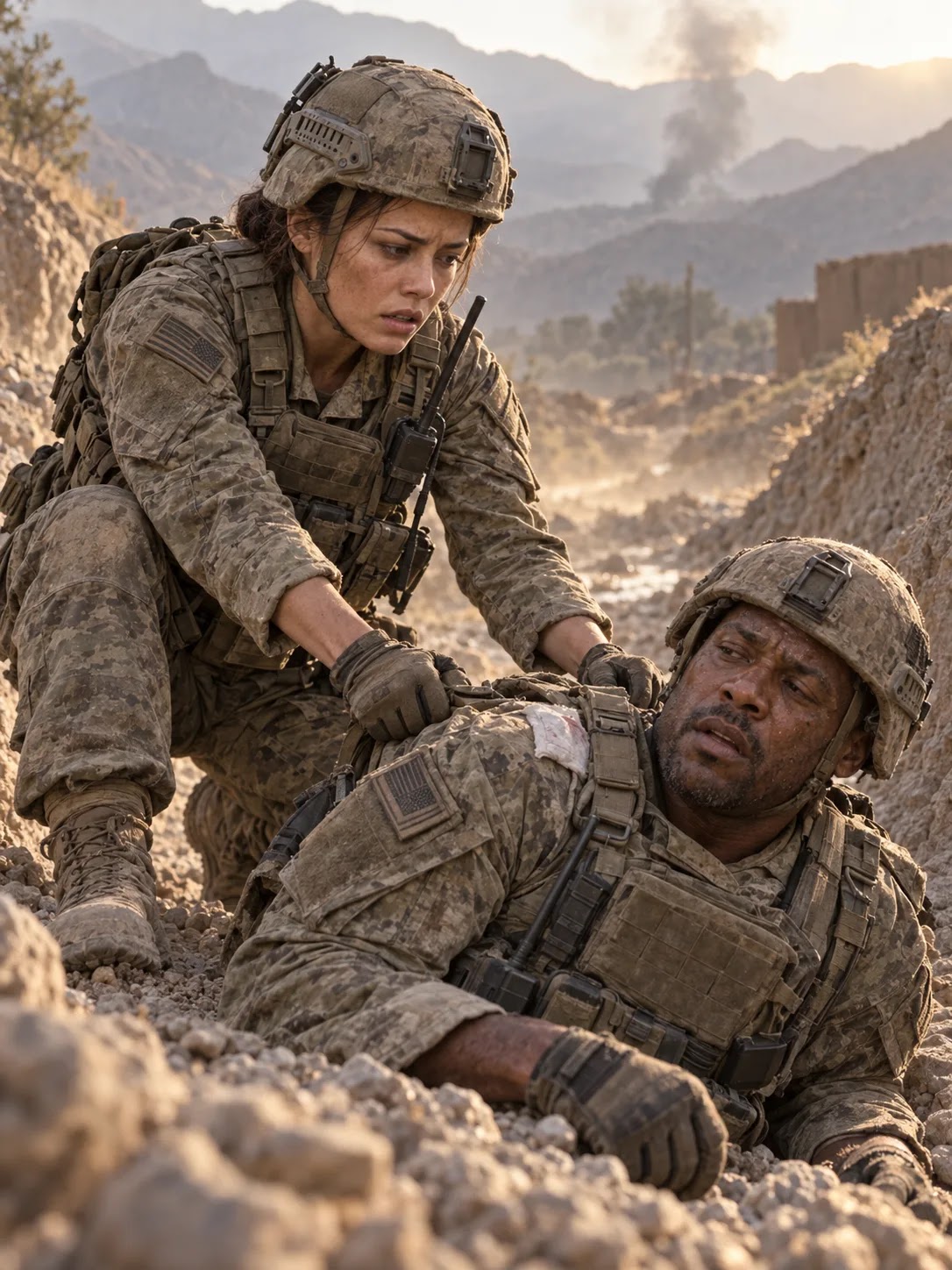
I was back in Afghanistan.
Smoke.
Dust.
Radio chatter.
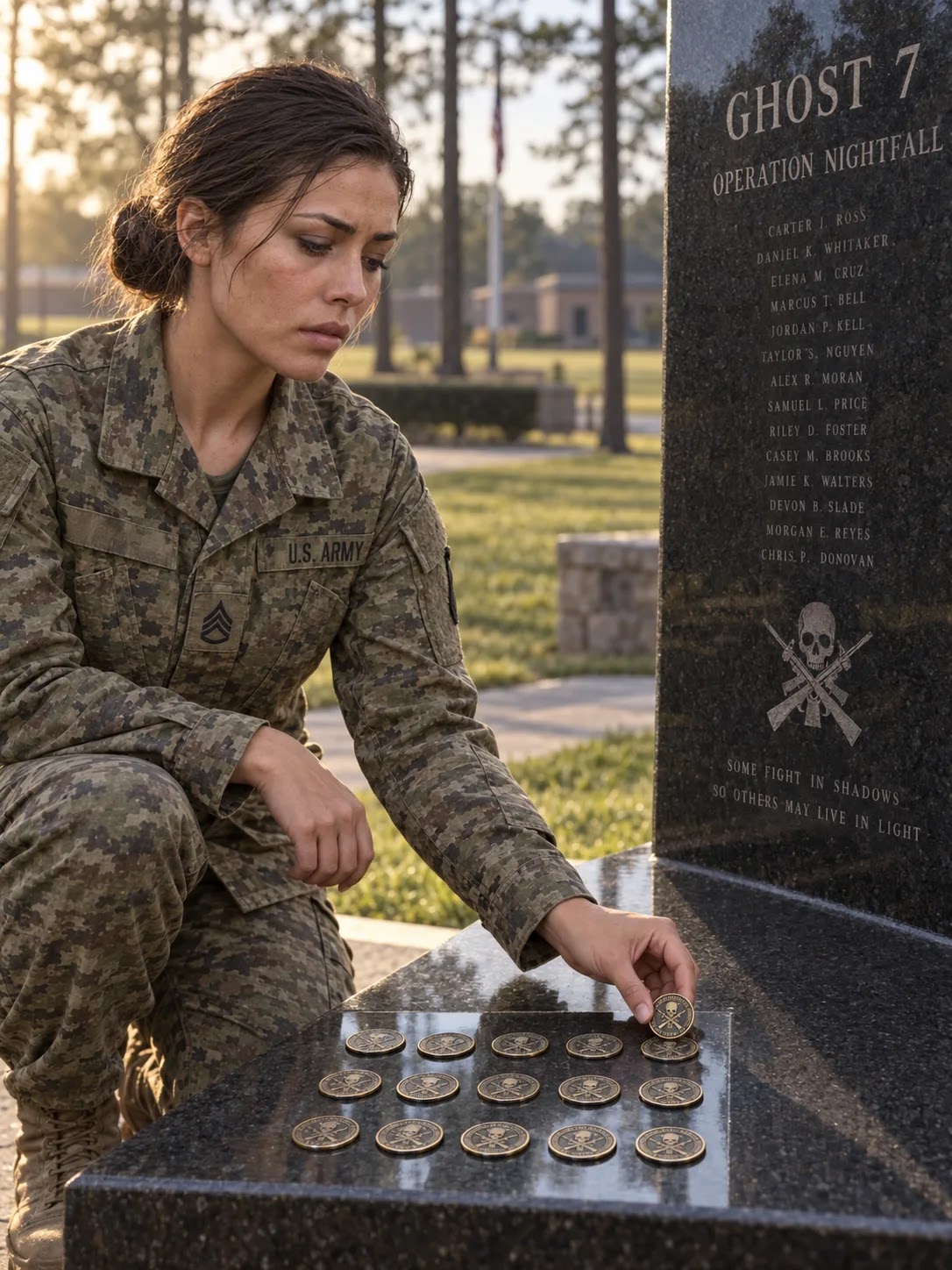
Fourteen names.
Morrison came to attention.
Then he saluted.
Every instructor on the field froze.
His voice carried across the obstacle course.
“Staff Sergeant Maya Reeves.”
Marcus looked at me.
Staff Sergeant.
I was wearing recruit insignia.
Morrison continued.
“Ghost Unit Seven.”
Another pause.
“Operation Nightfall.”
His eyes never left mine.
“Sole survivor.”
Nobody moved.
Then came the words I wished he hadn’t said.
“Silver Star.”
His gaze shifted toward the scars across my shoulder and upper arm.
The burns Marcus had called Frankenstein skin.
The surgical lines he had joked looked like someone had put me back together in the dark.
Morrison’s expression hardened.
“Purple Heart.”
I wanted the ground to open beneath me.
Not because I was ashamed of the medals.
Because medals had a way of making people forget what they cost.
Marcus stepped backward.
Morrison turned toward him.
“Private Caldwell.”
Marcus snapped to attention.
“Sir!”
“Did you just put your hands on a fellow soldier?”
Marcus swallowed.
“Sir, I—”
“That was not a complicated question.”
“Yes, sir.”
“Did you deliberately damage her uniform?”
“Yes, sir.”
“And before that?”
Marcus looked confused.
Morrison glanced toward Sergeant Tanaka.
She answered.
“Persistent harassment, sir. Verbal. Physical intimidation. Multiple witnesses.”
Morrison looked back at Marcus.
“Is that accurate?”
Marcus’s face had lost all color.
“Yes, sir.”
Morrison took one step closer.
“You spent a week deciding she didn’t belong because she was smaller than you.”
Marcus said nothing.
“You mocked injuries you didn’t understand.”
Nothing.
“You challenged a soldier whose record you didn’t bother to know.”
His voice dropped.
“And now that you know it, suddenly you’re afraid.”
Marcus stared forward.
“Sir.”
Morrison’s voice sharpened.
“Do not be embarrassed because she has medals.”
He pointed toward my ripped uniform.
“Be embarrassed because you needed medals before you believed she deserved respect.”
That hit harder than anything else.
Marcus lowered his eyes.
Morrison said:
“Look at me.”
Marcus obeyed.
“I can remove you from this training cycle before lunch.”
The field remained silent.
Marcus’s jaw tightened.
“Understood, sir.”
Morrison turned toward Sergeant Tanaka.
“Have him report to the company commander.”
“Yes, sir.”
I spoke.
“General.”
Morrison stopped.
Every recruit looked at me.
I hated that.
“Sir, may I speak?”
He studied me.
“Apparently you’ve earned that privilege.”
I looked toward Marcus.
He wouldn’t meet my eyes.
“Don’t remove him.”
That produced more surprise than the tattoo had.
Morrison frowned.
“Staff Sergeant?”
“I’m technically Recruit Reeves here, sir.”
His eyebrow moved slightly.
“We’ll discuss that administrative disaster shortly.”
A few instructors almost smiled.
I continued.
“Marcus was wrong.”
Marcus finally looked at me.
“But if you throw him out because he picked the wrong person to bully, he’ll learn the wrong lesson.”
Morrison folded his arms.
“And what lesson should he learn?”
I looked at Marcus.
“That he shouldn’t treat anyone like that.”
Not a Silver Star recipient.
Not a special operator.
Anyone.
Morrison watched me for several seconds.
Then:
“Sergeant Tanaka.”
“Sir.”
“Caldwell remains.”
Marcus breathed out.
“Under your personal supervision.”
Tanaka’s expression suggested Marcus might have preferred removal.
“With pleasure, sir.”
Morrison turned toward me.
“Reeves.”
I knew what was coming.
“Walk with me.”
We entered an empty administrative building.
Morrison closed the door.
Then stared at me.
“What the hell are you doing in basic training?”
I sat.
“Long story.”
“I read a six-hundred-page after-action report on Nightfall.”
He took the chair opposite me.
“I have time.”
I looked toward the window.
“Eighteen months ago, the medical board discharged me.”
“I know.”
“Left arm nerve damage. Twenty-three percent loss of grip strength. Lung damage. Two surgeries on my hip.”
“Also know.”
“I rehabilitated.”
“I definitely know that. You sent three appeals.”
“Four.”
Morrison almost smiled.
“Fourth one reached me after you were already here.”
I looked at him.
He continued.
“Your reinstatement request was approved conditionally.”
“That’s what I thought.”
“It was.”
“Then why am I here?”
Morrison leaned back.
“Because someone processed you as a prior-service applicant whose occupational qualification had expired.”
I stared.
“So they reset me?”
“Through initial-entry validation.”
“Basic training.”
“Apparently.”
I laughed.
I couldn’t help it.
Morrison stared at me.
“You’re laughing?”
“Sir, I survived seventy-two hours in Kandahar to be killed by Army paperwork.”
He almost laughed too.
Almost.
Then his expression changed.
“Why didn’t you correct anyone?”
I looked down at my hands.
“I tried the first day.”
“And?”
“Clerk told me the records were sealed.”
“They were.”
“So I stopped.”
“That makes no sense.”
“It did to me.”
Morrison studied me.
I knew that look.
He had used it during debriefing after Nightfall.
Waiting until silence became heavier than the answer.
Finally I said:
“I wanted to know if I could still do it.”
“Basic?”
“Be a soldier.”
His expression softened.
“You needed two hundred recruits to decide that?”
“No.”
I looked toward my scarred arm.
“I needed nobody to know who I used to be.”
That silenced him.
I continued.
“Every doctor knew.”
“Every therapist knew.”
“Every officer who visited Walter Reed knew.”
“Every time someone looked at me, they saw Nightfall.”
Morrison said quietly:
“You were the only one who came back.”
“I know.”
“You brought classified material out.”
“I know.”
“You carried Sergeant Brooks six miles.”
My jaw tightened.
“He died anyway.”
Morrison stopped.
There it was.
The thing medals never mentioned.
Brooks didn’t survive.
Neither did Captain Riley.
Or Torres.
Or Kim.
Or Dawson.
Or the other nine.
Fourteen members of Ghost 7 went into that valley with me.
I came out.
People called that heroic.
Sometimes I called it arithmetic.
Morrison leaned forward.
“Maya.”
I looked at him.
“You did not kill them by surviving.”
I stood.
“Permission to return to training, sir.”
“That’s not an answer.”
“It wasn’t a question.”
He watched me.
Then nodded.
“Fine.”
I moved toward the door.
His voice stopped me.
“There’s something else.”
I turned.
“The Nightfall file has been reopened.”
Every part of me went cold.
“Why?”
Morrison’s face changed.
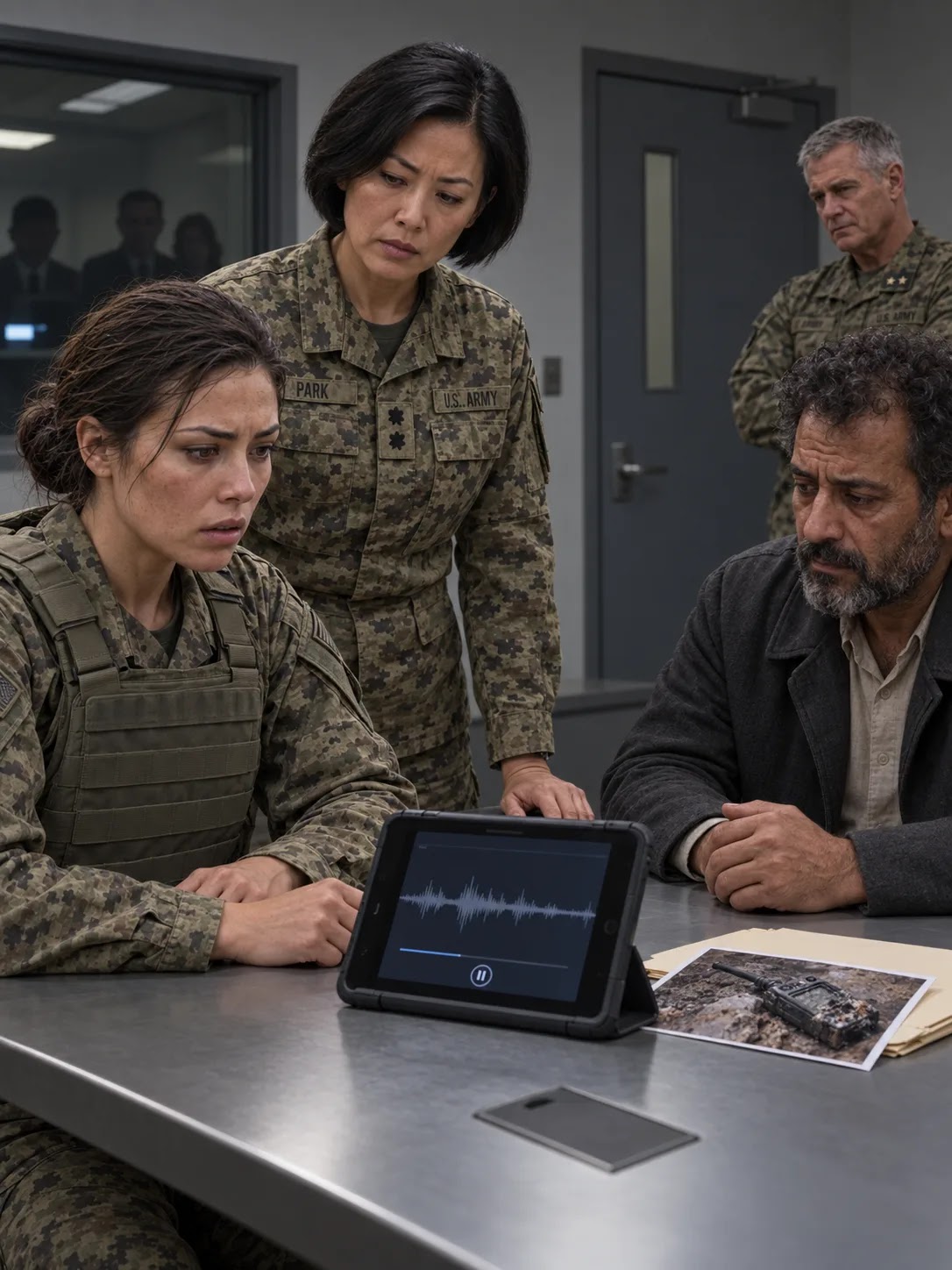
“Because three days ago, military intelligence recovered a radio from a weapons broker in Pakistan.”
I waited.
“The encryption key belonged to Ghost 7.”
I stared at him.
“Impossible.”
“That’s what we thought.”
“All team radios were destroyed or recovered.”
“One wasn’t.”
“Whose?”
Morrison hesitated.
That terrified me more than the answer.
“Captain Riley’s.”
I stopped breathing.
Riley had been our commander.
And he had died beside me.
I had watched it happen.
Morrison continued.
“The radio transmitted twelve minutes before the ambush began.”
I looked at him.
“To who?”
“We don’t know.”
“From Riley?”
“We don’t know that either.”
I felt Kandahar beginning to crawl back beneath my skin.
Morrison said:
“Someone may have given away Ghost 7’s position.”
Fourteen graves entered the room with us.
I whispered:
“You think Nightfall was compromised.”
Morrison looked directly at me.
“I think somebody sent your team into a kill zone.”
I returned to the barracks that evening.
Nobody made jokes.
That was almost worse.
When I entered the mess hall, conversations stopped.
People moved aside.
One recruit offered me his seat.
I didn’t take it.
I walked to the same table where Marcus had told me real soldiers sat.
He was there alone.
His jaw was swollen from Hank—no, from my earlier strike in the pit? No. From nothing. I had never hit his face.
He looked at me.
I sat across from him.
For a while, neither of us spoke.
Finally:
“Why’d you save me?”
I took a drink of water.
“I didn’t.”
“Morrison was going to kick me out.”
“You still have to explain yourself to the company commander.”
“That’s not what I mean.”
I looked at him.
Marcus swallowed.
“I was horrible to you.”
“Yes.”
“I thought…”
He stopped.
“What?”
He looked embarrassed.
“I thought you were getting special treatment.”
I laughed softly.
“I was sleeping on a top bunk with a damaged shoulder.”
“Yeah.”
He looked down.
“I might’ve been wrong.”
“Might?”
“Definitely.”
I waited.
Marcus finally said:
“I’m sorry.”
I believed he meant it.
That didn’t mean everything disappeared.
“Don’t apologize because of the tattoo.”
He looked up.
“Then why?”
“Because you were wrong before you saw it.”
He nodded.
I stood.
Marcus asked:
“Reeves.”
I turned.
“Ghost 7…”
He hesitated.
“What happened?”
The mess hall suddenly felt too small.
I looked at him.
“Everyone died.”
Then I walked away.
That night, for the first time in months, I dreamed of Kandahar.
Except this time, the radio was transmitting.
And someone on the other end was answering.