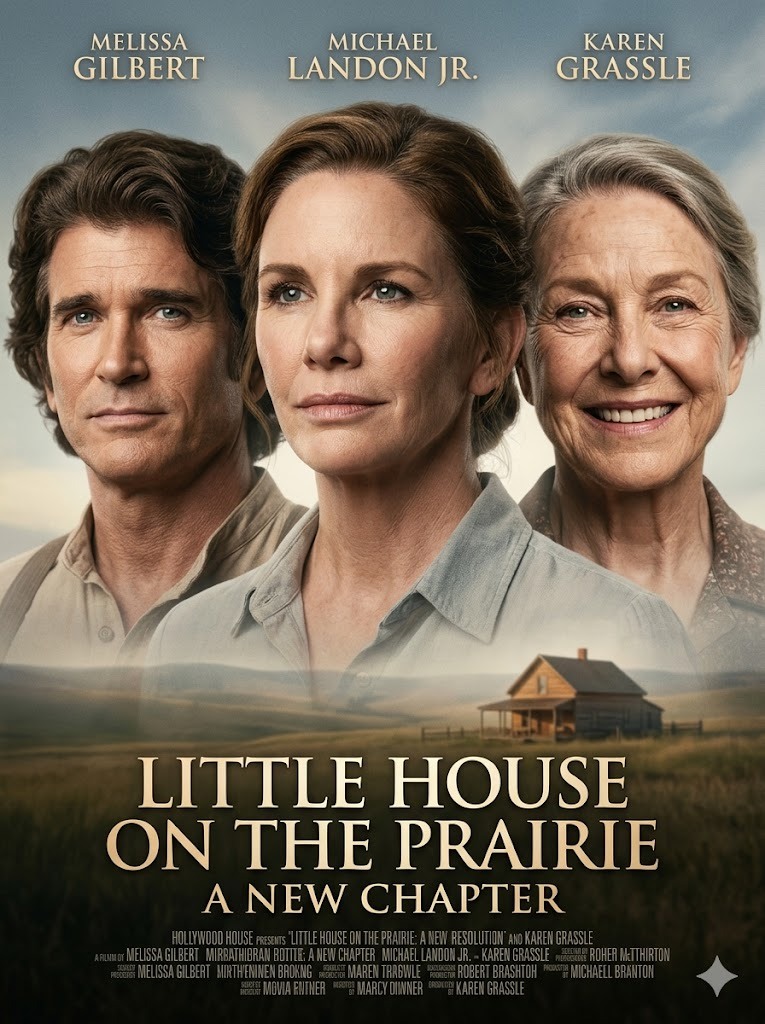
In an era where television is dominated by spectacle, fast pacing, and high-concept storytelling, Little House on the Prairie (2026) arrives with something far more radical: sincerity. This Netflix reboot does not simply revive a beloved classic—it redefines it for a modern audience hungry for authenticity, emotional depth, and grounded storytelling. Beneath its quiet surface lies one of the most powerful narratives of resilience ever brought to screen.
This is not just a story about a family. It is a story about survival, identity, and the fragile dream of building a life from nothing.
A Return to the Prairie — But Not as You Remember It
The original series from the 1970s painted a warm, often idealized portrait of frontier life. It became iconic for its heartfelt tone and moral clarity, offering audiences a comforting vision of family and community. However, the 2026 adaptation takes a bold and necessary step forward—it strips away nostalgia and replaces it with realism.
Here, the prairie is not just beautiful. It is unforgiving.
From the very first episode, the audience is immersed in a world where survival is uncertain. Crops fail. Winters are brutal. Illness spreads without warning. The land, vast and silent, becomes both a promise and a threat. This tonal shift transforms the series into something far more cinematic—closer to a historical drama than a traditional family show.
And yet, it never loses its heart.
The Ingalls Family — Humanity at the Center of Hardship
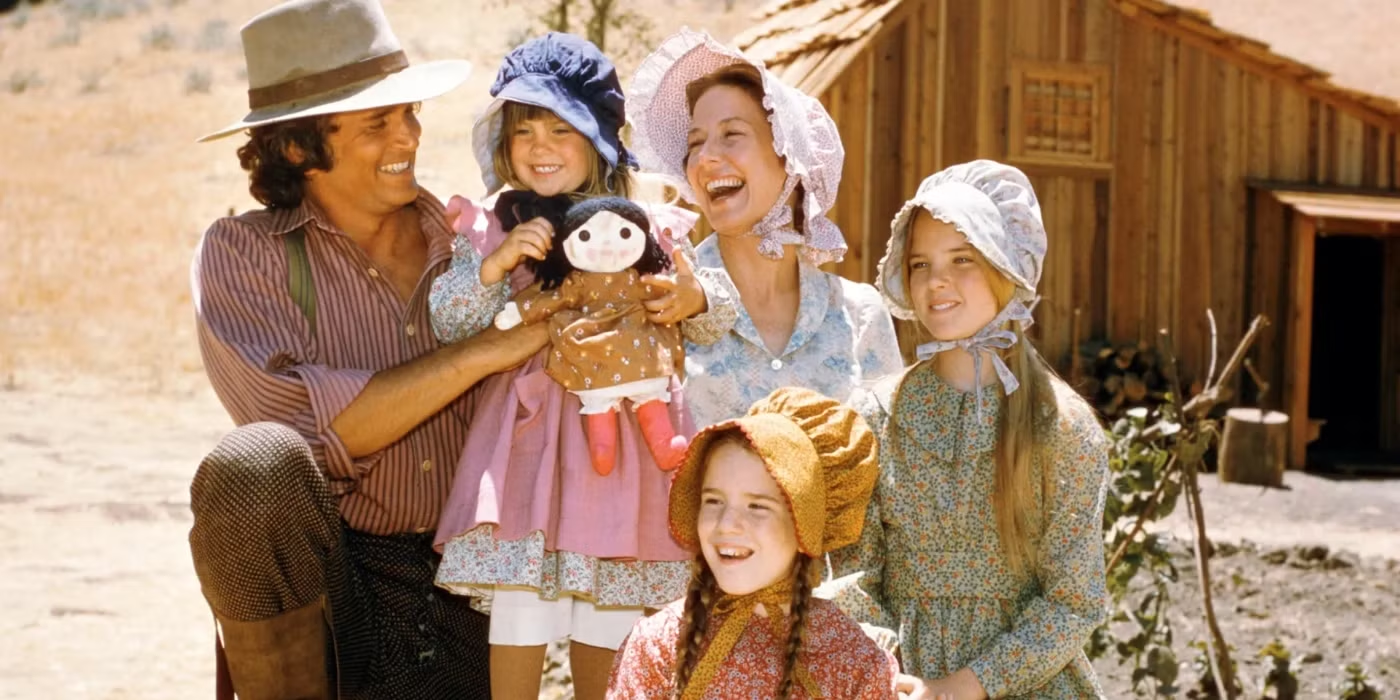
At its core, the series remains deeply personal. The Ingalls family is not portrayed as heroic figures in the traditional sense. Instead, they are flawed, vulnerable, and profoundly human.
Charles Ingalls is no longer just the ideal father figure. He is a man burdened by responsibility, struggling to provide in a world that offers no guarantees. Every decision he makes carries weight—every risk could mean survival or loss.
Caroline Ingalls emerges as one of the most compelling characters in the series. Her strength is quiet but unshakable. She holds the family together not through grand gestures, but through resilience, emotional intelligence, and unwavering determination.
And then there is Laura.
Through her eyes, we witness the transformation from innocence to awareness. She begins as a child filled with curiosity and wonder, but the realities of frontier life reshape her understanding of the world. This coming-of-age journey is one of the series’ most powerful narrative threads, offering viewers an intimate look at how hardship forges identity.
A Story Rooted in Historical Truth
One of the defining strengths of Little House on the Prairie (2026) is its commitment to historical authenticity. Rather than romanticizing the past, the series confronts it head-on.
The show explores the complexities of westward expansion, including the tension between settlers and Native American communities. These interactions are handled with nuance, presenting multiple perspectives rather than a simplified moral narrative. This approach adds depth and relevance, allowing the story to resonate with contemporary audiences.
Economic struggles are also brought into sharp focus. Land ownership, debt, and the constant threat of financial collapse create a sense of tension that runs beneath every episode. This is not a world where hard work guarantees success. It is a world where survival often depends on luck as much as effort.
The Prairie as a Character
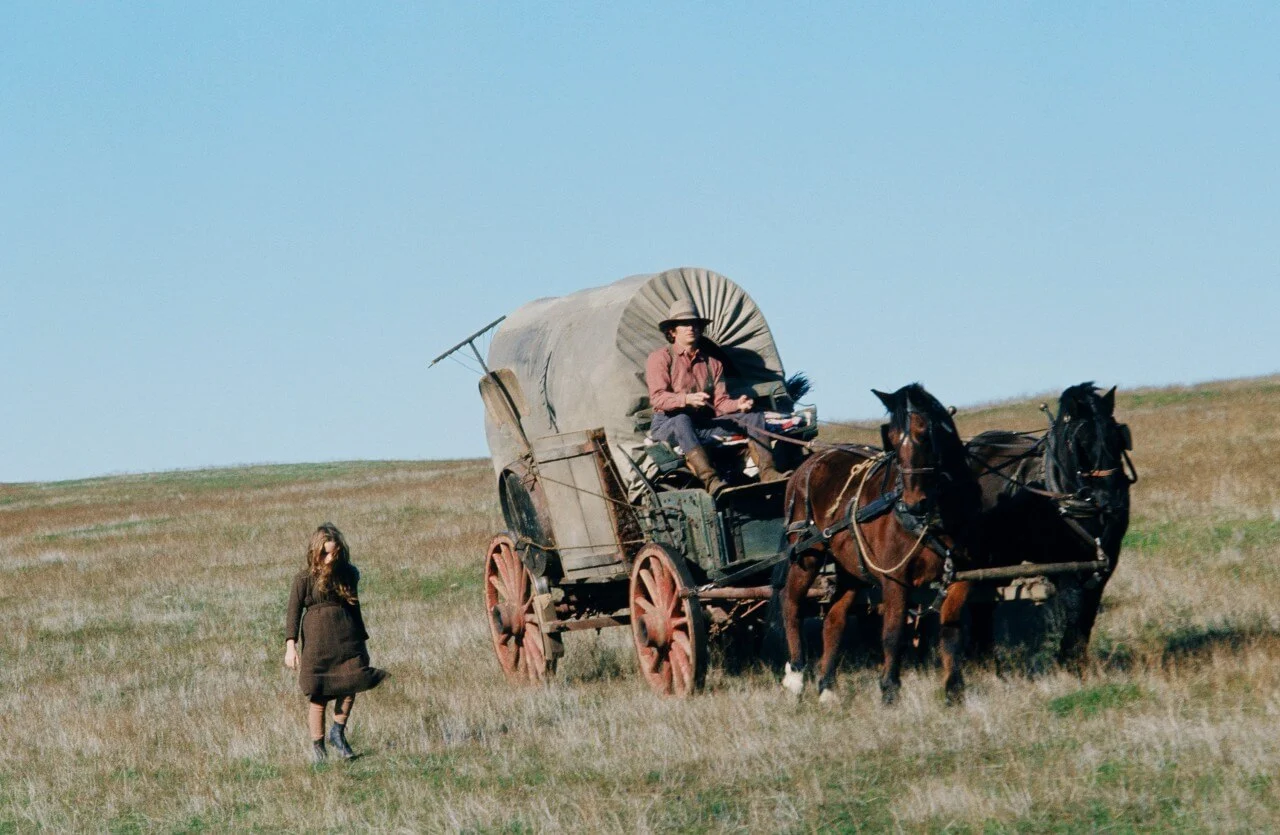
Visually, the series is nothing short of breathtaking. The prairie itself becomes a living, breathing presence—vast, beautiful, and indifferent.
Cinematography plays a crucial role in shaping the emotional tone. Wide shots emphasize isolation, while intimate close-ups capture the subtle expressions of characters navigating difficult choices. Natural lighting enhances the realism, creating a sense of immediacy that draws viewers deeper into the story.
But what truly sets the series apart is how it uses silence.
Moments without dialogue are given space to breathe. The sound of wind across the fields, the creaking of wooden floors, the distant call of animals—these details create an immersive experience that feels almost tactile. It is a reminder that life on the prairie is defined not just by action, but by stillness.
Themes That Resonate Beyond Time
While the series is set in the 19th century, its themes feel strikingly modern.
Survival and Moral Complexity
In a world where resources are scarce, every decision carries ethical implications. The series explores what people are willing to sacrifice in order to survive—and what they refuse to give up, even in the face of desperation.
The Meaning of Home
For the Ingalls family, home is not a place. It is something they build together, piece by piece, through hardship and perseverance. This idea resonates deeply in a time when many people are searching for stability in an uncertain world.
The Cost of Progress
As society begins to change, the series examines the impact of progress on traditional ways of life. It raises questions about what is gained—and what is lost—when the world moves forward.
A Modern Audience, A Timeless Story
What makes Little House on the Prairie (2026) truly remarkable is its ability to bridge generations. For those familiar with the original series, it offers a deeper, more nuanced interpretation of a beloved story. For new viewers, it stands on its own as a compelling drama that requires no prior knowledge.
Its pacing may feel slower compared to modern standards, but this is intentional. The series invites viewers to slow down, to observe, and to connect with the characters on a deeper level. It is a rare experience in today’s fast-paced media landscape.
Why This Series Matters
In a time when content is often designed for instant consumption, Little House on the Prairie (2026) dares to be different. It does not rely on shock value or constant twists. Instead, it builds its impact through careful storytelling, emotional authenticity, and a deep respect for its source material.
This is a series that understands the power of simplicity.
It reminds us that the most compelling stories are not always the loudest ones. Sometimes, they are the quiet moments—the shared glances, the unspoken fears, the small victories—that leave the strongest impression.
Final Thoughts
Little House on the Prairie (2026) is more than a reboot. It is a reimagining that honors the past while embracing the complexities of the present. It challenges viewers to reconsider what they know about frontier life and invites them to experience it in a way that feels immediate and real.
In doing so, it achieves something rare: it makes an old story feel entirely new.
And in the vast, untamed prairie, where every day begins with uncertainty, one truth remains constant—
Hope is not something you find.
It is something you build.