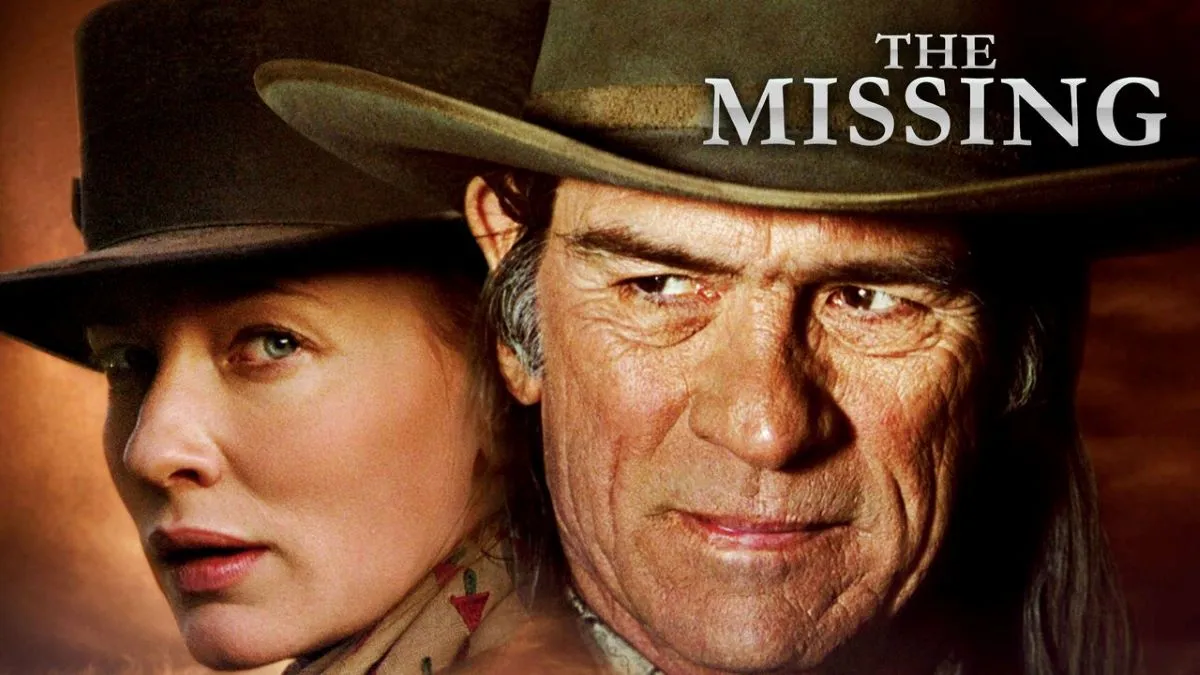
In a genre often defined by stoic cowboys and dusty showdowns, The Missing dared to do something different. Under the direction of Ron Howard, this 2003 Western thriller transformed the American frontier into something terrifying—almost mythic in its darkness.
A Story Rooted in Family Betrayal
At its core, the film is not about gunfights. It is about abandonment.
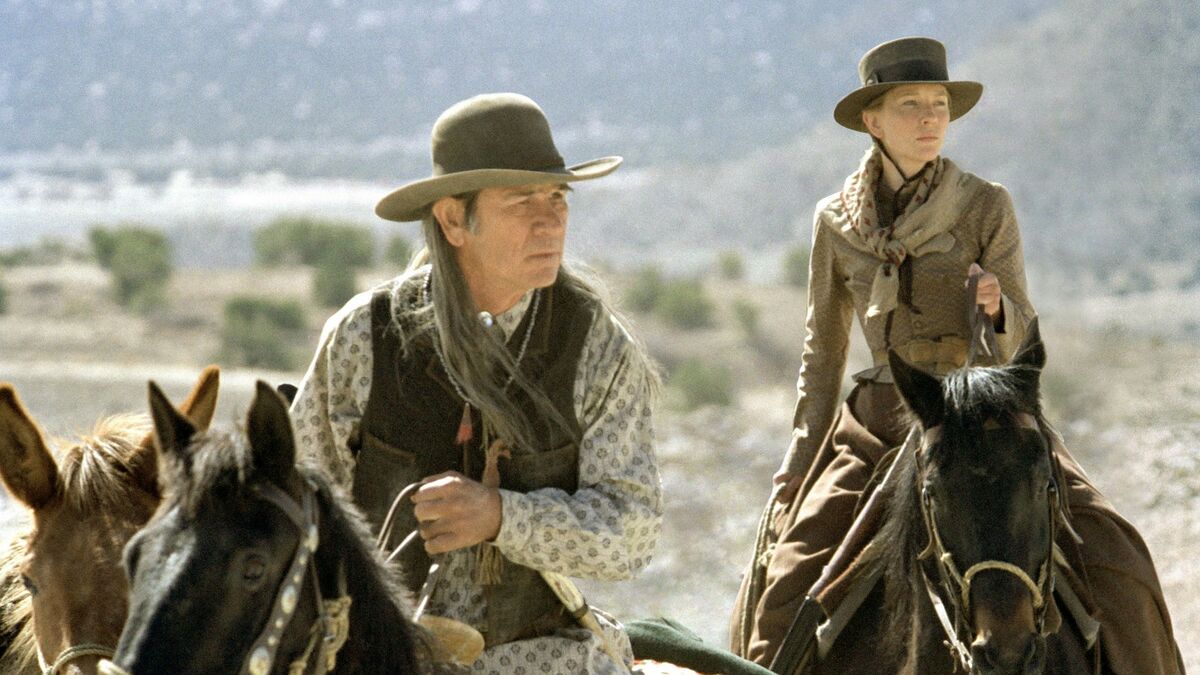
Maggie Gilkeson, portrayed with stunning emotional force by Cate Blanchett, has spent years resenting her father, Samuel Jones. Played by Tommy Lee Jones, Samuel left his family to live with the Apache tribe, choosing a new identity over his responsibilities.
When Maggie’s daughter is kidnapped, she has no choice but to accept Samuel’s help. The rescue mission becomes more than a physical journey—it is a reckoning between past and present.
Horror in the Desert
The film’s antagonist, Chidin, is portrayed with cold menace. He kidnaps young women to sell them across the Mexican border. Yet what makes him frightening is not merely his brutality, but the psychological warfare he employs. His ritualistic practices and manipulation of fear create an atmosphere that feels closer to horror than traditional Western action.
The desert becomes a living antagonist. The landscape is vast but offers no comfort. It isolates. It punishes. It exposes weakness.
A Western Led by a Woman
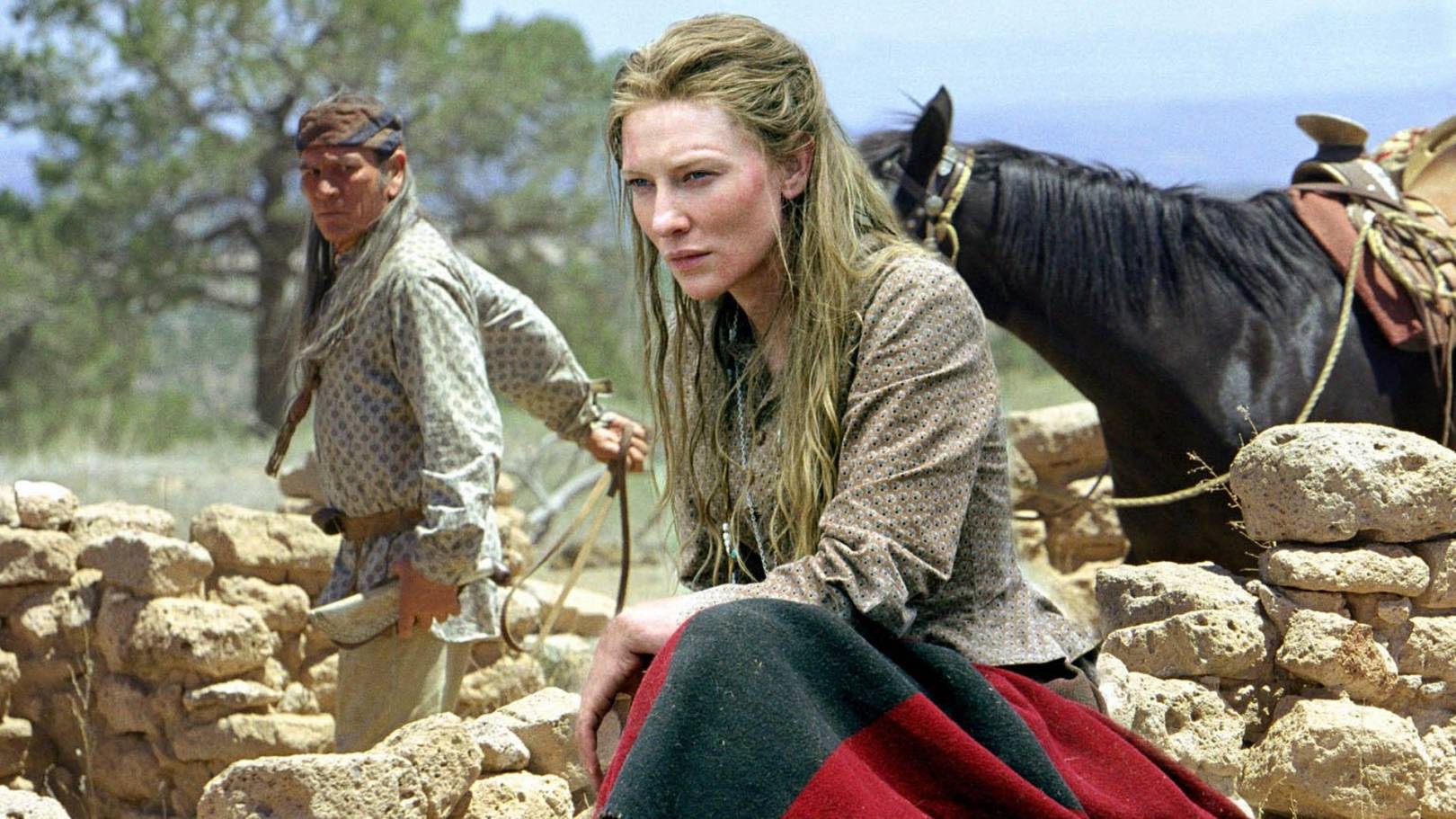
One of the film’s strongest elements is its decision to center the narrative on a female protagonist. Maggie is not saved by her father—she fights beside him. She tracks. She shoots. She survives.
Cate Blanchett brings steel and vulnerability in equal measure. Her performance refuses melodrama. Instead, she channels quiet rage and unwavering determination.
In many ways, The Missing was ahead of its time. It challenged the male-dominated conventions of Western cinema and delivered a character study wrapped inside a survival thriller.
Emotional Closure Through Violence
The climax is not simply a showdown; it is catharsis. Samuel must confront his past choices. Maggie must decide whether forgiveness is possible.
The final confrontation is brutal and unglamorous. There is no romanticism. Just raw survival.
Legacy of an Underrated Western
While not as commercially successful as other Western revivals, The Missing remains a powerful example of genre evolution. It blends family drama, thriller pacing, and frontier realism into something uniquely unsettling.
In today’s era of polished blockbusters, revisiting this film feels refreshing. It is uncompromising. It is emotionally charged. And it refuses to offer easy comfort.
The Missing reminds us that the Wild West was not merely a playground for legends. It was a place where families fractured—and sometimes, if they were lucky, found their way back together.