The warehouse had been used for storing salvaged furniture, and the fire spread through the upper rafters before the alarm was noticed. The family who owned the building had called an emergency crew, but the coordinator in charge wanted the evacuation completed quickly. He feared that a prolonged search would expose how often the property had ignored inspection warnings.
His younger brother worked as a volunteer responder. They had grown up competing for their father’s approval, and the coordinator had built his entire adult identity around being the responsible one. The younger brother was seen as impulsive because he questioned instructions and listened carefully to frightened people instead of assuming they were confused.
When smoke filled the main corridor, the coordinator ordered everyone toward the front entrance. The younger brother heard a faint metallic tapping from a side room. He asked for permission to search it, but the coordinator said the noise was probably falling debris. The younger brother pointed out that the side room had a reinforced door and a functioning ventilation gap. Someone could be trapped inside.
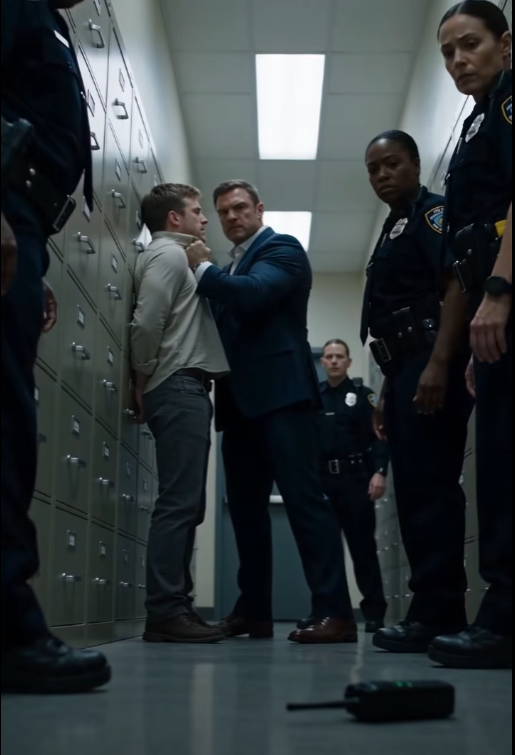
The coordinator told him to follow orders. The younger brother refused and moved toward the door. The coordinator struck him once in the chest, knocking him back against a stack of padded furniture. The responders froze. The younger brother stayed conscious and immediately reached for the radio that had fallen between them.
The coordinator grabbed the radio first and tried to pull him away. The younger brother caught his wrist and controlled the movement long enough to break free. Two responders stepped between them and separated them. The coordinator shouted that the younger man was endangering the whole crew, while the younger brother held up a damaged flashlight that had been found near the door.
A female responder noticed a tiny blinking light beneath the flashlight’s cracked casing. It was not part of the flashlight. It was an emergency beacon, still transmitting from the side room. She took it from the younger brother and studied the pulse pattern. The signal was active, which meant someone inside had managed to trigger it.
She said the signal had come from inside. The coordinator’s authority collapsed in a single breath. The younger brother looked toward the door. Behind it, a muffled adult voice called for help. The responders stopped listening to the coordinator and began working together to force the lock without damaging the frame.
The door opened to reveal an adult warehouse clerk crouched beneath a table, conscious but disoriented from the smoke. The clerk explained that the coordinator had ordered him to remain in the side office earlier while he checked an electrical fault, then failed to report that the door had jammed. The coordinator insisted he had believed the clerk escaped through another passage.
The younger brother did not accuse him immediately. He helped the clerk into clean air, then returned for the beacon. Outside, the coordinator tried to frame the incident as a communication error. The female responder replayed the radio log, which showed the coordinator dismissing the tapping before the younger brother was struck.
The brothers’ conflict had never truly been about courage. The younger brother had spent years being labeled reckless because he refused to ignore people who did not fit the official plan. The coordinator had mistaken control for competence and silence for proof that he was right.
An independent review removed the coordinator from field command. He was not treated as a monster, but he was required to accept responsibility for the failed inspection reports, the concealed trapped adult, and the assault on his brother. The younger brother gave testimony without exaggerating what happened.
Weeks later, the rescued clerk returned to the warehouse with a repaired beacon. He handed it to the younger brother and said it had saved his life. The younger brother gave it to the coordinator instead, explaining that everyone who leads an emergency should remember that the smallest signal may carry the truth.
The coordinator did not ask for immediate forgiveness. He began retraining under people he had once dismissed. His brother remained cautious, but they started speaking honestly for the first time in years. Their relationship was not magically repaired. It was simply no longer built on one brother commanding and the other brother obeying.
The warehouse reopened only after every emergency system was tested in public. The beacon remained mounted beside the side-room door, blinking steadily whenever the building lost power. It became a quiet warning: authority is useful only when it listens.