The father had spent thirty years repairing houses for other people and almost no time defending himself. After his wife died, the family home became the center of a bitter dispute. Their adult son claimed the father had forged a transfer document and secretly promised the property to a distant relative. The accusation spread quickly because the son had hired a polished attorney and arrived with a stack of official-looking papers.
The father had no attorney of his own at first. He believed the family could resolve the conflict privately. His son interpreted that hope as weakness. He told relatives that his father was confused and grieving, and that the property needed a younger, more capable owner. The father knew the truth: his wife had placed the home in a trust that protected it from being sold without her husband’s consent.
The missing piece was the notary who had witnessed the original transfer. According to the son’s attorney, the notary had died abroad two years earlier. The father remembered meeting the woman in a small office on a rainy afternoon, but he had no way to prove that memory mattered.
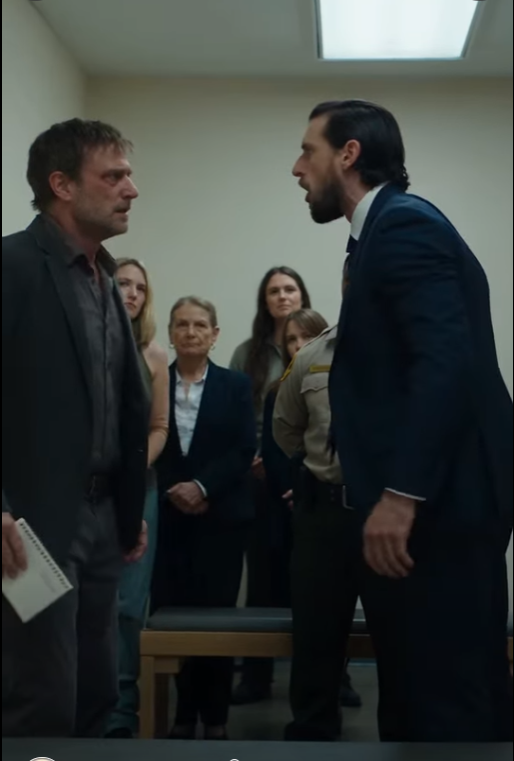
At the hearing, the son arrived with relatives who had already accepted his version. He stood near the attorney and spoke loudly about forged signatures, stolen opportunities, and a father who refused to let the next generation move forward. The father listened without interrupting.
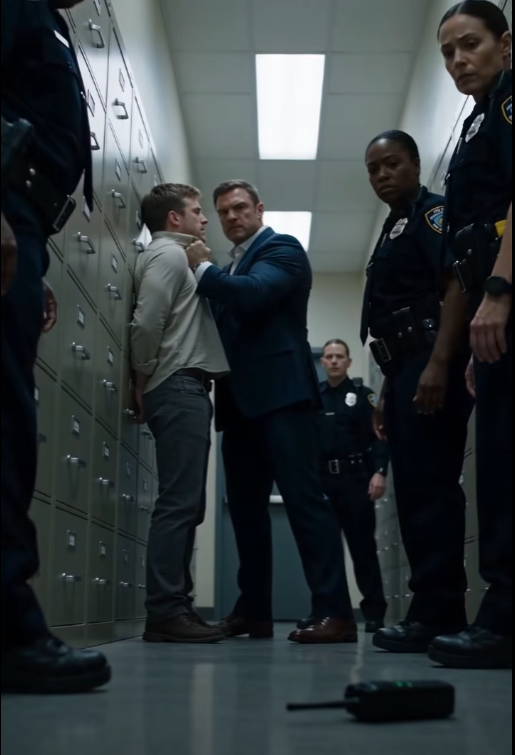
When the hearing officer asked whether he had anything to add, he said that the document should be compared with the original trust record. The son laughed and accused him of inventing another excuse. He moved across the room, grabbed his father’s tie, and drove him backward against the rail. The father’s shoulder struck wood. Several adults gasped, but the son’s attorney told everyone to remain calm.
The son shouted, “You forged it!” and struck his father hard in the ribs. The father caught the rail and stayed upright. Pain tightened his face, but he refused to answer with anger. The room fell silent as the son stepped back, suddenly aware that every witness had seen what he had done.
The attorney closed the folder. She had been hired by the son, but she had spent the previous night reviewing a sealed archive that had arrived from overseas. The archive contained a notarized audio statement and a travel record proving the notary was alive.
She looked toward the rear door and said, “The signer is here.”
The door opened. The elderly notary entered slowly with a walking cane and a certified identity packet. She had not died. She had been living under medical care in another country, unaware that her name had been used to support a false claim. She recognized the father immediately and confirmed that his wife had signed the trust transfer in her presence.
The son’s face changed from anger to disbelief. He demanded to know why the attorney had brought her into the room. The attorney answered that she had believed her client’s version until the original archive contradicted it. She had a professional duty to correct the record, even if it destroyed the case she had been paid to present.
The hearing officer ordered the documents preserved and referred the false filing for investigation. The son was not allowed to remain near his father during the proceeding. The family’s arguments continued for months, but the property could no longer be transferred through pressure or deception.
The father eventually moved into a smaller apartment and placed the house in a protected community trust. He could have kept the property for himself, but he remembered how many families had been displaced by similar disputes. The home became a temporary residence for adults rebuilding their lives after financial hardship.
His son later apologized, but the father did not immediately embrace him. He said forgiveness would require more than regret. It would require accepting the consequences and helping repair the damage. The notary returned to her quiet life, while the attorney began taking cases for people whose families assumed they could not fight back.
The father never became louder. He simply stopped mistaking patience for surrender. The room had once believed the loudest person held the truth. The living witness proved otherwise.