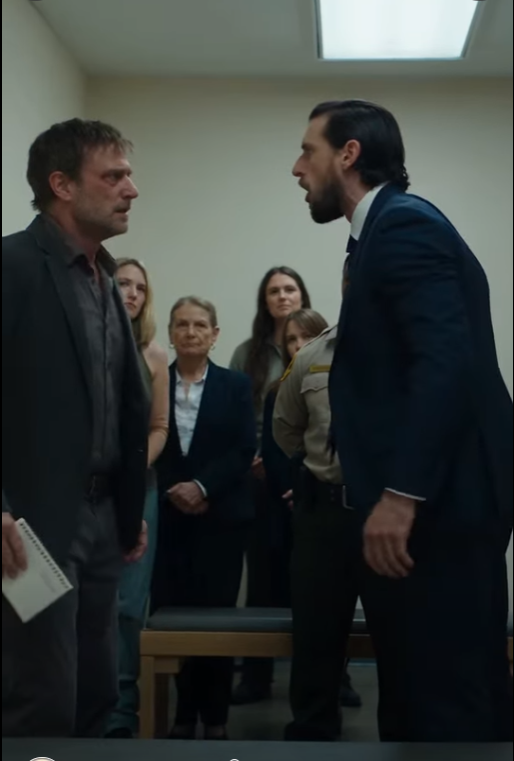
The son had been unconscious for three days after a highway collision, and his family had gathered at the private medical residence where he was recovering. His wife controlled the gate, the visitor list, and every message sent to the hospital. She told everyone that the mother had abandoned the family years ago and had no right to appear now.
That story was not entirely false. The mother had left the town when her marriage collapsed, but she had done so after discovering that her former husband had been using their son to hide debts. She believed distance would protect him from the family’s bitterness. Over the years, she sent birthday gifts and letters, but most never reached him. The wife intercepted them, convinced that the mother wanted to reclaim influence rather than repair the relationship.
When the mother learned about the crash, she traveled through the night. She arrived at the estate in a soaked coat, carrying no luggage and asking for only a few minutes beside her son. The wife met her at the gate and told her to leave. The mother did not argue. She said she had information about her son’s medical history that the doctors needed to know.
The wife laughed and called her a manipulator. Two relatives stood behind her, unwilling to challenge the person controlling access. A driver nearby watched uneasily as the mother repeated that she had signed a medical authorization years earlier because her son had a rare reaction to a common sedative.
The wife told her that no one believed her. When the mother reached toward the gate, the wife struck her once on the shoulder. The older woman recoiled but stayed upright in the rain. The wife grabbed her sleeve and pulled her away from the entrance, warning her never to return. The driver stepped between them, and the wife released the fabric with an angry shake.
The mother did not retaliate. She simply looked down at the small metal medical bracelet around her wrist. It had belonged to her son when he was a child, and he had given it back to her after she signed the emergency release that saved him during an earlier crisis. The driver recognized the engraving. He had been present at the old hospital years before, when the mother spent an entire night arguing with doctors until they found the correct treatment.
The driver told the wife that the mother had signed her son’s first emergency release. The wife stared at the bracelet. She had never known that the mother’s medical knowledge was the reason her husband had survived his childhood illness. More importantly, the bracelet carried the son’s own handwriting, proving that he had never considered his mother a stranger.
The driver opened the gate and called the attending physician. The mother explained the medication reaction in precise detail. The medical team confirmed that the information was essential and adjusted the treatment before administering the next dose.
The son woke the following morning. His first question was whether his mother had arrived. When he saw her, he did not ask why she had left years earlier. He asked why she had waited so long to come back. She told him the truth: she had been afraid that returning would place him between two people who wanted him to choose sides.
He took her hand and said he had spent years believing she had chosen to disappear. The mother admitted that silence had protected neither of them. His wife stood nearby, ashamed but defensive. She apologized for blocking the gate, though the apology did not erase the violence or the years of intercepted messages.
The son asked his wife to give the mother every letter she had kept. The wife did so reluctantly. The family discovered more than a dozen unopened messages, each written in a different year. The mother did not demand revenge. She asked only that future decisions about the son’s care be made openly, with doctors and family members present.
The recovery was slow, and the marriage did not return to normal. The wife agreed to counseling, while the son established clear boundaries around medical decisions and family contact. The mother stayed in a small guest room nearby, not as a replacement for anyone, but as a parent finally allowed to be present.
The gate that had once kept her outside became a place where the family learned to stop controlling the truth. It opened reluctantly at first, then more easily. No one pretended the past had vanished. They simply stopped locking it away.