The adopted daughter had never expected to inherit anything. Her father had brought her into the family as an adult after finding her working alone in a public archive. He gave her a room, a job, and eventually the confidence to call the house home. His biological son never accepted the decision.
The son believed blood gave him automatic authority. He treated his adopted sister as temporary, even after she spent years caring for their father during illness. When the father died, the son took control of the family office and announced that the estate would be divided according to tradition.
The daughter knew their father had left instructions, but she did not know where the original recording was kept. Before his death, he had given her an old wooden music box. It had belonged to his mother and had stopped playing years earlier. He told her not to open the base until the family stopped listening to rumors.
The son arranged a private meeting at the family lawyer’s office. He arrived with relatives who assumed he had already won. The daughter brought the music box and asked for the complete will, not the summary he had circulated.
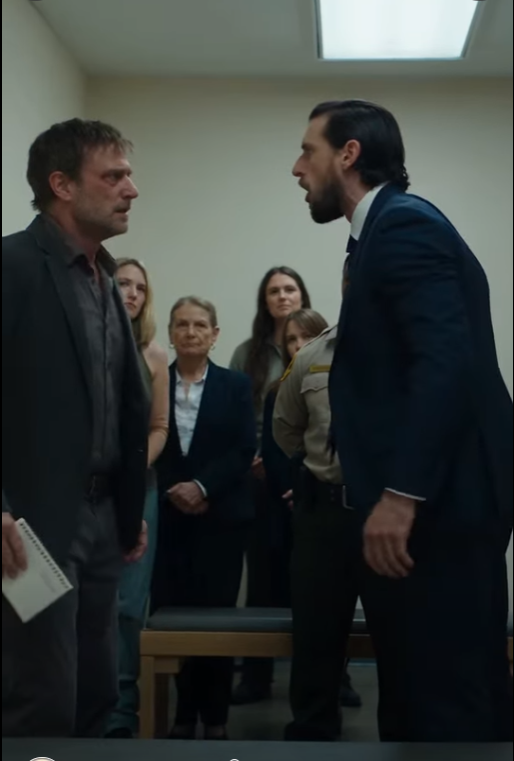
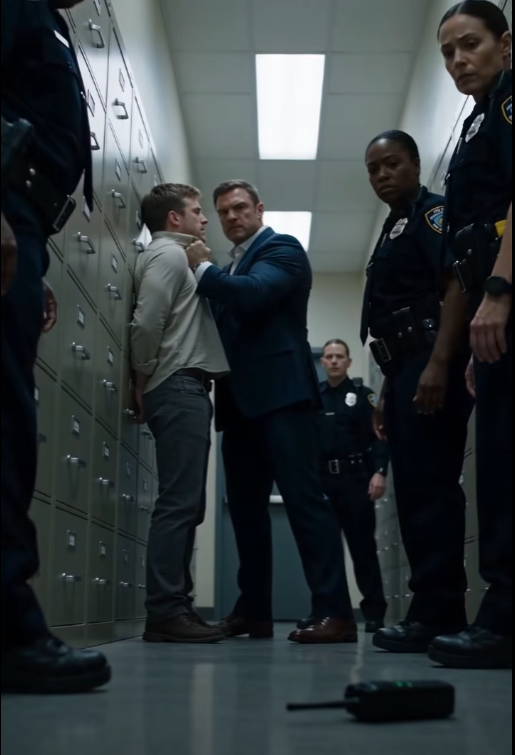
The son accused her of exploiting a lonely old man. He said adoption did not erase blood and demanded that she hand over every key, account, and property record. She refused. He grabbed her coat and shoved her into a cabinet while shouting, “You are not his heir!”
The daughter hit the cabinet with her shoulder but kept hold of the music box. She said their father had made his wishes clear. The son struck her upper arm with a heavy punch when she would not surrender it. The lawyer stood immediately, and the room went silent.
The daughter placed the music box on the desk. She turned the small brass latch beneath it. The box did not play a melody. Instead, a hidden recorder activated.
The father’s voice filled the office: “She receives the house.”
The son froze. The recording continued. The father explained that the daughter had been his chosen caregiver, business partner, and family in every meaningful sense. He left the house to her because she had protected it from people who considered love a transaction. The biological son would receive a smaller inheritance, but only after acknowledging the debt he had refused to share.
The lawyer confirmed that the recording had been authenticated with a timestamp, a witness signature, and an archived copy held outside the family office. The son accused the lawyer of conspiring with his sister. She answered that she had followed the father’s instructions and had delayed the recording because he wanted the full will read first.
The daughter did not smile. She had expected the son to challenge the evidence, but she had not expected the physical aggression. The lawyer arranged medical evaluation for her arm and documented the incident. The family meeting became part of the legal record.
The son later apologized for the assault, but the daughter did not immediately restore his access to the house. She told him that inheritance could be corrected by law, but trust required time. He eventually began caring for their father’s neglected garden as part of the settlement, not as a performance, but as a responsibility he had avoided.
The daughter kept the music box in the entrance hall. She repaired its broken mechanism, but she did not replace the hidden recorder. The box played a simple melody again, yet she always remembered the moment the father’s voice had filled the room.
The house became a residence for adults needing a safe place after family disputes. The daughter managed it with the same patience her father had shown her. She never told residents that family was defined by blood or paperwork. She told them it was defined by who stayed when staying became difficult.