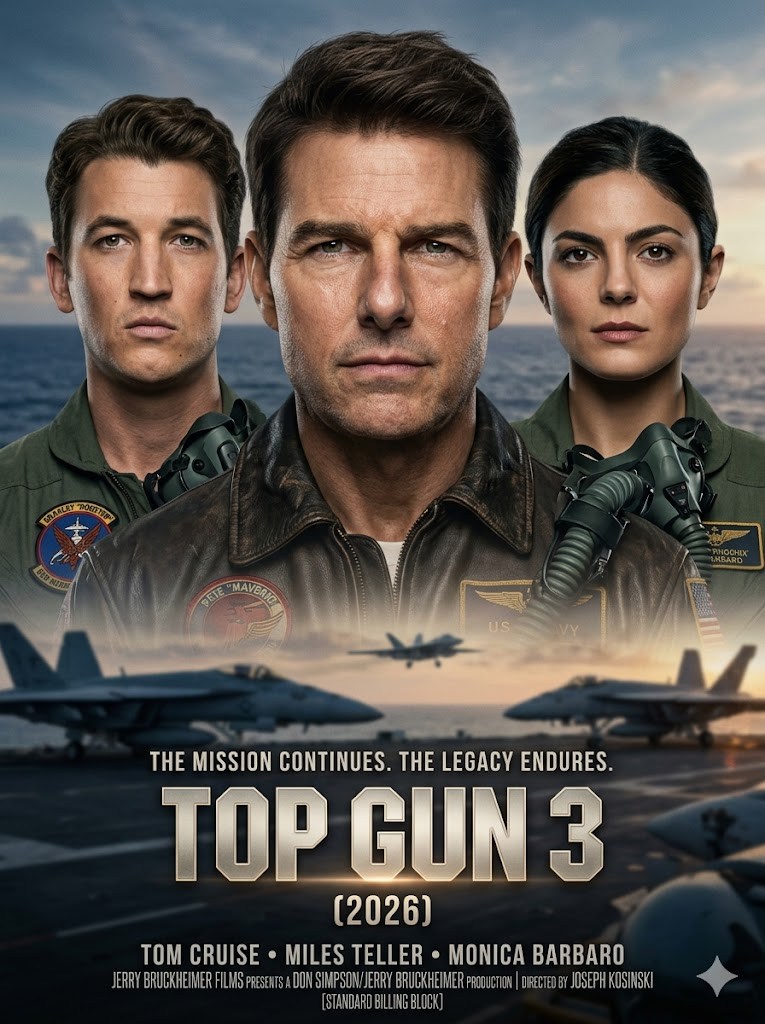
Few cinematic franchises have managed to redefine themselves across generations quite like Top Gun and its global phenomenon sequel Top Gun: Maverick. Now, with Top Gun 3 officially in development, anticipation is reaching critical altitude. This next chapter is not just another sequel—it represents a pivotal moment where legacy, technology, and identity collide in the skies.
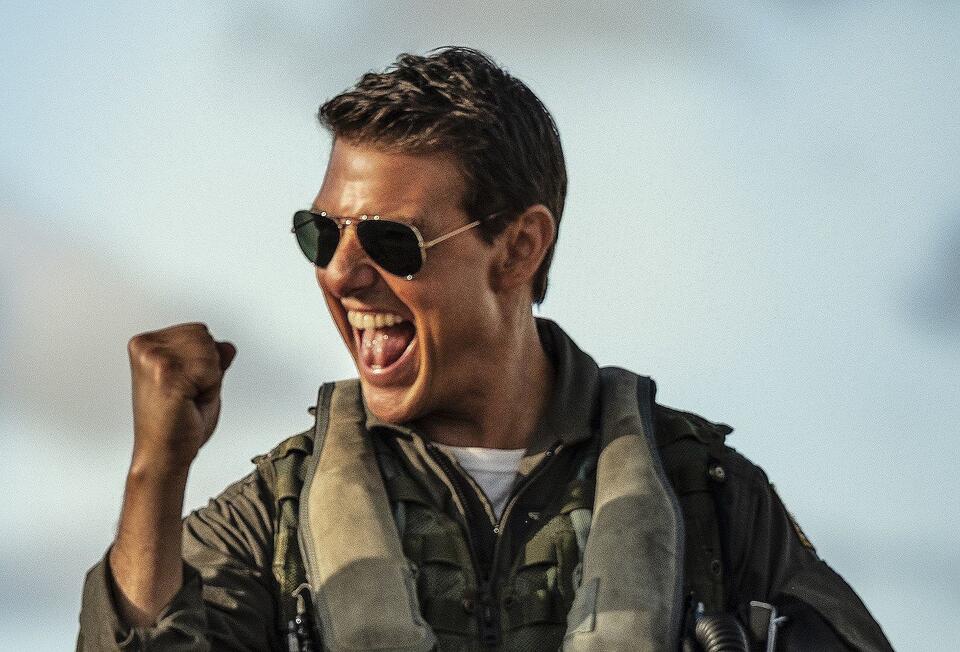
At the center of it all remains Tom Cruise, returning once again as Pete “Maverick” Mitchell. But this time, the stakes are fundamentally different. Maverick is no longer just the reckless prodigy or the redeemed veteran—he is something far more complex: a living relic in a rapidly evolving world.
A Franchise That Refuses to Stall
When Top Gun: Maverick soared past expectations, it didn’t just revive nostalgia—it redefined blockbuster storytelling. Under the direction of Joseph Kosinski, the film balanced breathtaking practical aerial cinematography with emotional depth rarely seen in action cinema. Backed by Paramount Pictures and Skydance Media, it proved that audiences still crave authenticity and human stakes.
With Jerry Bruckheimer returning as producer, Top Gun 3 is poised to carry that same DNA forward. Yet the real challenge isn’t replicating success—it’s evolving beyond it.
Because this time, the question isn’t whether Maverick can still fly.
It’s whether the world still needs him.
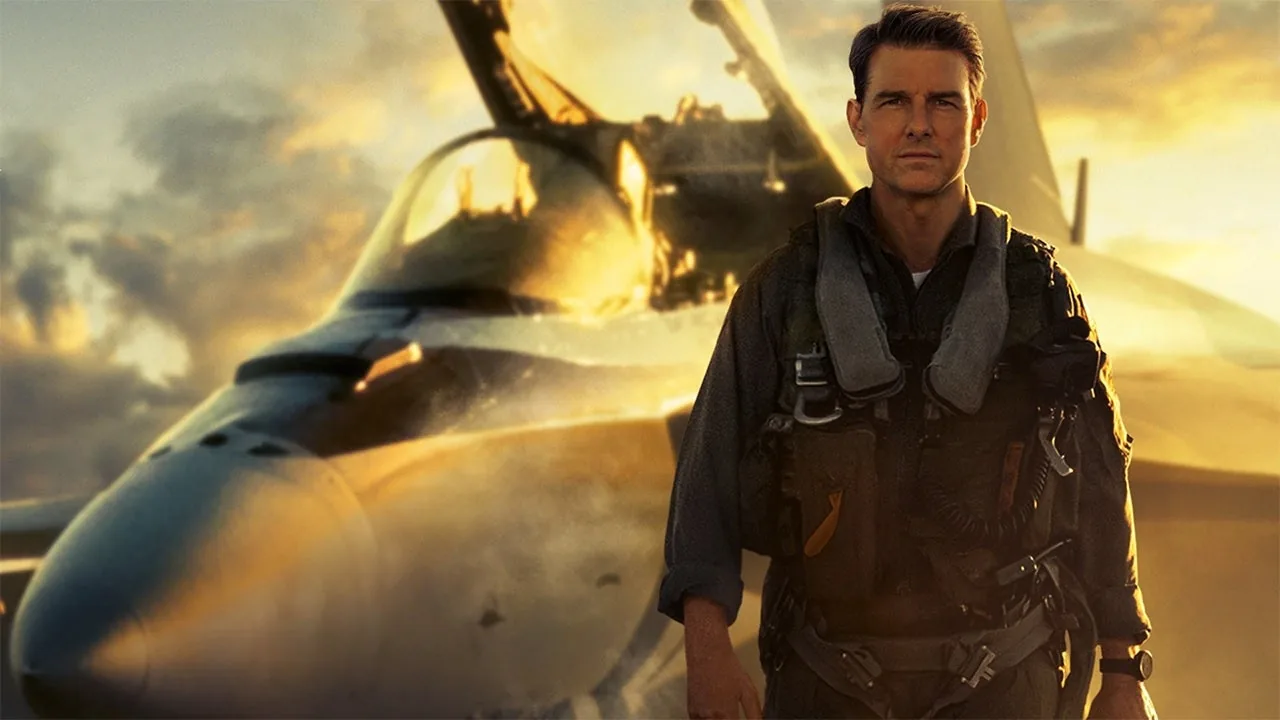
The Evolution of Maverick: From Pilot to Symbol
Across two films, Maverick has undergone a subtle but powerful transformation. In the original, he was driven by instinct and rebellion. In Maverick, he was forced to confront his past, mentor a new generation, and accept responsibility.
Now, Top Gun 3 presents a compelling narrative opportunity: Maverick as a symbol of a fading era.
In a military landscape increasingly dominated by automation, artificial intelligence, and drone warfare, Maverick represents something almost obsolete—human intuition.
This creates a deeply emotional conflict. Not an external enemy, but an existential one.
What happens when the very skills that defined you are no longer relevant?
Man vs Machine: The Core Conflict
One of the most intriguing directions for Top Gun 3 lies in its potential exploration of modern warfare. The rise of unmanned aerial systems and AI-assisted combat introduces a thematic shift that could elevate the film beyond traditional action.
Imagine a world where:
- Dogfights are calculated by algorithms
- Decisions are made in milliseconds by machines
- Human error is no longer tolerated
In that world, Maverick becomes a paradox.
He is both the greatest strength—and the greatest risk.
This tension between human instinct and machine precision could drive the film’s central conflict. Not just in combat, but in philosophy.
Is perfection worth sacrificing humanity?
The Next Generation Takes Flight
While Maverick remains the emotional anchor, the future of the franchise depends on its younger pilots. Characters like Rooster and Hangman, portrayed by Miles Teller and Glen Powell, are expected to play crucial roles.
Their arcs could evolve in compelling ways:
- Rooster stepping out of Maverick’s shadow to define his own leadership
- Hangman embracing responsibility beyond ego and bravado
But more importantly, they represent the bridge between past and future.
Where Maverick resists change, they must adapt to it.
This generational dynamic adds emotional weight, ensuring the film is not just about action—but identity.
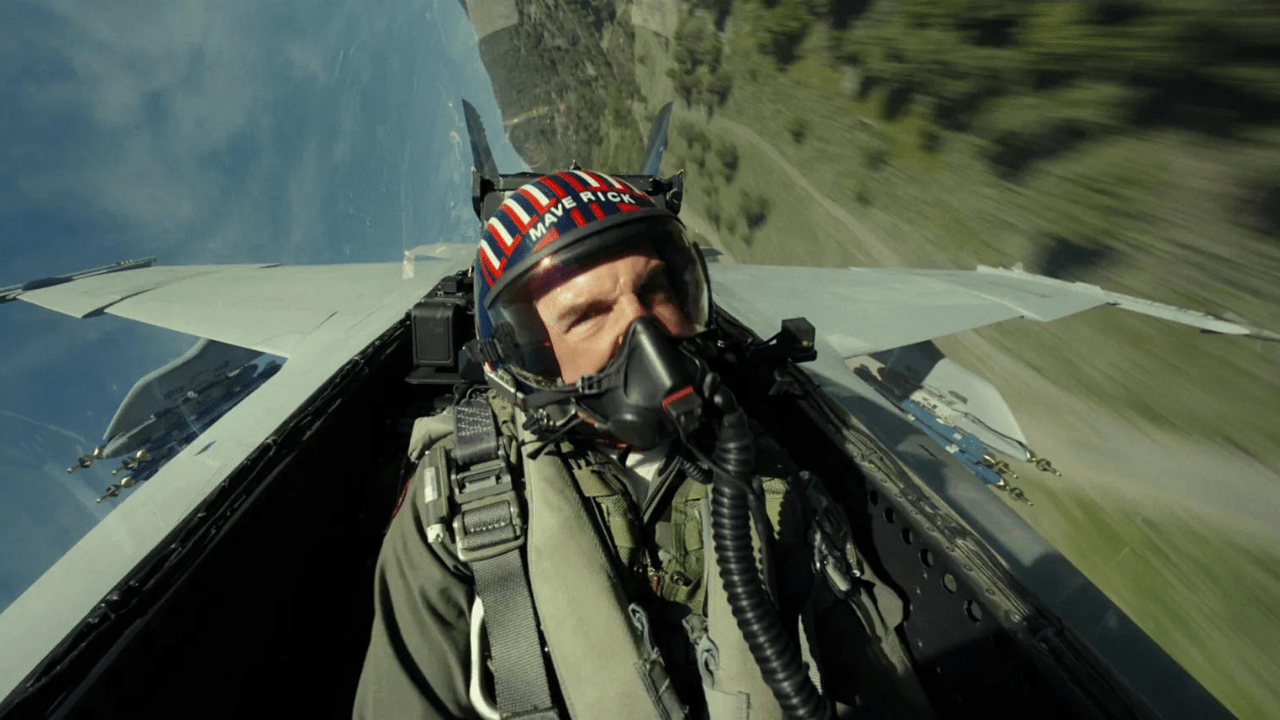
Raising the Stakes: Beyond the Impossible Mission
If Top Gun: Maverick was defined by its near-impossible mission, Top Gun 3 must escalate the scale without losing intimacy.
This could mean:
- A multi-national conflict with geopolitical implications
- A mission involving cutting-edge stealth or AI-driven aircraft
- Or a scenario where technology fails—and only human skill can prevail
But the true escalation lies not in spectacle, but in consequence.
Because this time, failure may not just cost lives.
It may redefine the future of warfare itself.
The Emotional Core: Letting Go vs Holding On
What made Maverick resonate wasn’t just its action—it was its emotional honesty. The guilt, the mentorship, the quiet moments of reflection.
Top Gun 3 has the opportunity to deepen that emotional core.
Maverick may be forced to confront a painful truth:
- That his role is no longer to lead missions
- But to inspire those who will
This creates a powerful thematic question:
Is legacy about staying in the fight…
or knowing when to step aside?
Why Top Gun 3 Matters
In an era saturated with sequels and reboots, Top Gun 3 stands apart because it has something meaningful to say.
It is not just continuing a story—it is questioning it.
- What defines a hero in a technological age?
- Can tradition survive innovation?
- And what does it mean to truly “fly” when machines can do it better?
These are not just cinematic questions—they reflect real-world anxieties about progress and identity.
Final Thoughts: Redefining the Sky
As development continues following its announcement at CinemaCon 2026, one thing is clear:
Top Gun 3 is not just about speed, adrenaline, or nostalgia.
It is about transformation.
If executed correctly, it could become the defining chapter of the franchise—not because it is bigger, but because it is deeper.
Because in the end, Maverick’s greatest challenge may not be an enemy in the sky.
It may be accepting that the sky itself has changed.